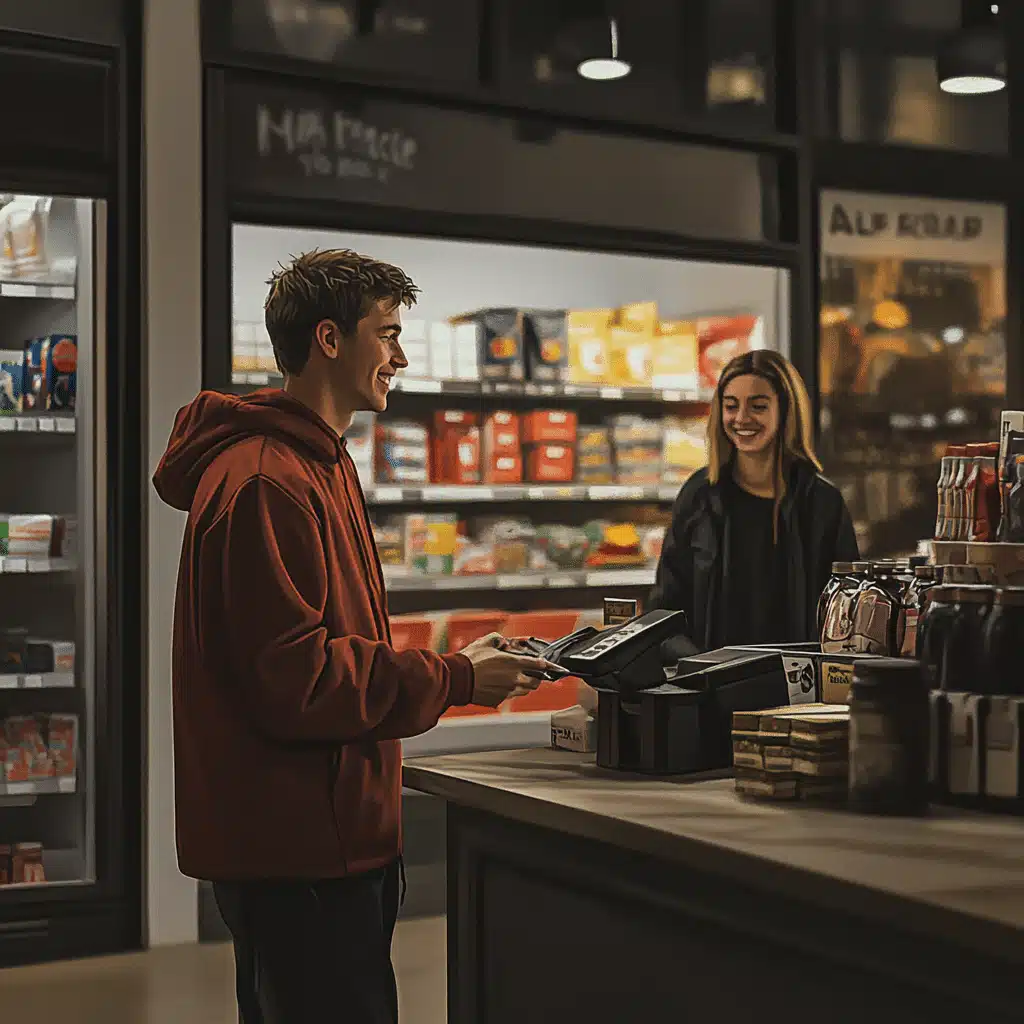



When customers inquire about what POS system Chick-fil-A uses, they’re curious how a fast-casual establishment with flawless service requirements every day is capable of processing so many individuals inside and out without mistakes. The answer is a computing power point-of-sale (POS) solution that equals efficiency, speed, and authorization across various methods of ordering and payment. As a name synonymous with drive-thru capabilities, satisfaction, and standardization, the POS system under wraps at Chick-fil-A embodies why so many love dining there. From a Quick-Service Restaurant (QSR) performance to managing the bottlenecked redundancies of high-volume transactions to grasping how POS integration works for simplicity and reporting, businesses like Chick-fil-A set themselves up for success through technology and merchant service partnerships. For high-risk and high-volume merchants, POS use exceeds its potential as a resource—it becomes a competitive edge against the competition.
The Significance of POS in Quick Service
While a POS system merely records transactions and facilitates payments, to Chick-fil-A, it’s much more than that. The POS must integrate with kitchen displays, loyalty programs, mobile ordering applications, and real-time in-depth reporting dashboards. This is because the efficiency of the POS impacts how the brand answers its call for speed and friendliness. Unlike independently owned restaurants, Chick-fil-A has severe repercussions should anything differ from location to location. Consequently, the POS serves as a remedy to troubleshoot any potential miscommunications across thousands of locations and multiple ordering mediums. No matter where someone orders—with cash or credit at the register or via drive-thru or electronically—it seamlessly integrates into the expectation for the customer and the kitchen. This is why Chick-fil-A is one of the most reputable QSR brands in the country.
What POS System Does Chick-fil-A Use?
According to POS guys, Chick-fil-A uses a proprietary version of NCR Aloha POS, which is one of the most widely used restaurant POS systems available today. Over the years, as Chick-fil-A grew from a humble idea to an extensive, nationally franchised franchise known across America, it modified what operations were necessary in NCR Aloha for things like real-time reporting, drive-thru transmittals, and loyalty integrations. This allows an all-in-one restaurant to offer consistent results across all mediums while also offering a mobile experience and contactless payments. Ultimately, the remapped NCR Aloha system can withstand incredibly high transaction volume during peak lunch and dinner times for speed and accuracy[1].
Why It Works So Well
The reason the POS system works so well is that it creates speed, efficiency, and accuracy across all ordering trends. For example, drive-thru transactions are quickly processed—and even handheld tablets by onboard employees work to facilitate speed—as they reach the kitchen within seconds of remote triggering. The same holds for online/app purchases; ordering kiosks inside stores sync with all other channels to ensure duplication does not inadvertently happen, requiring error addressing. All channels transmit to corporate enterprise reporting systems so franchisees and corporate headquarters can view their real-time records. Therefore, with industry-leading merchant services partnerships, secure credit card processing occurs through authorization solutions compliant with PCI DSS[2].
What Merchants Can Learn About POS from Chick-fil-A
Businesses that don’t fall within QSR can learn valuable lessons about how Chick-fil-A utilizes POS to its advantage. For example—aside from successfully onboarding merchants via security—businesses learn to use customizations effectively. Off-the-shelf systems may not allow for new integrations or installations for industry-specific wants/needs. In addition, security matters—secure credit card processing fosters customer trust and limits disputation—and scalability allows POS systems to grow with one’s business as opposed to limiting future growth intentions. For high-risk merchants, e-commerce, or highly regulated facilities like cannabis, they quickly learn that POS is more than a transaction system—it’s part of an integrated strategy moving forward[3].
The Future of Quick Service POS Systems
In the future, we might see technological advancements occur through further integration into AI-driven order predictions—like Kroger allows swipe-and-go tools, telephone voice-activated ordering, and blockchain-payment security within accounts stored with any major business. Even biometric authentication will determine who puts their thumbprint down—and real-time fraud detection will become standard with enterprise-grade POS systems. Multiple forms of integrated multi-channel transactions will become quicker—as will those relegated to just one form of checkout—to learn how SMBs leverage personalized POS channels to stay competitive[4].
Main Components of Chick-fil-A's POS
Drive-Thru Transactions
Because many Chick-fil-A customers leverage their drive-thrus, the POS system works in conjunction with employees who take orders on tablets from customer cars. No one ends up waiting at the speaker for too long; the transactions flow from tablet to kitchen in mere seconds. This minimizes bottlenecks and lapses in attention while enabling multiple employees to serve multiple customers at once.
Mobile Ordering
The mobile application integrates nicely with the new POS system; this means people can purchase items ahead of time without any errors once they arrive at their destination. To Chick-fil-A's reputation—operating with "fast" and "friendliness"—it prevents people from waiting far too long just trying to expedite payment processing.
Credit Card Processing Security
The updated system continues to secure credit card processing with encryption tools and tokenization while maintaining PCI DSS compliance. Customers appreciate knowing their information is secure, which is an essential component when conducting high-volume operations.
POS Loyalty Program Integration
Customers enjoy using Chick-fil-A One's loyalty program credits that get properly processed within its upgraded POS systems. This assists in retention showing customer preference while increasing average order values.
Access to Real Time Reporting
Franchise owners can better participate in good customer service when given real-time insights via the reporting tools built inside the POS system. Whether locating employees at certain locations or troubleshooting when short on inventory at goodbye before last call, access to sorted data helps make staffing more effective.
Scalability
The upgraded NCR Aloha withstands high numbers of transactions one would associate with several hundred locations over thousands of states without a hitch—any new addition does not hurt other systems.
FAQ
Q: What POS system does Chick-fil-A use?
A: Chick-fil-A uses a customized version of NCR Aloha POS designed for drive-thru operations, mobile app utilization, and in-store endeavors processing at a high volume.
Q: Why is Chick-fil-A’s POS system effective?
A: It maximizes speed and efficiency across channels, supporting drive-thru mobile creations as well as in-person ordered transactions that require reporting in real-time.
Q: How does Chick-fil-A secure payment at checkout?
A: Its systems use tokenization, encryption requirements, and PCI DSS compliance to process secured credit card payments at checkout and maintain customer data protection[5].
Q: Can smaller businesses learn from Chick-fil-A’s success?
A: Absolutely! Customizations utilized annually prove exact sciences work with scalable opportunities—and secure payments eliminate high-risk concerns.
Q: What technology will change the future of POS systems?
A: Expect AI activities, blockchain payments—like digital securities—and biometric authentication for even quicker transaction times.
Sources
- Business Insider. “What POS System Does Chick-fil-A Use?” Accessed August 2025.
- QSR Magazine. “Inside Chick-fil-A’s Tech-Driven Approach.” Accessed August 2025.
- CardFellow. “What Is a POS System? Complete Guide.” Accessed August 2025.
- Visa. “Merchant Resources and POS Security.” Accessed August 2025.
- PCI Security Standards Council. “PCI DSS Overview.” Accessed August 2025.