
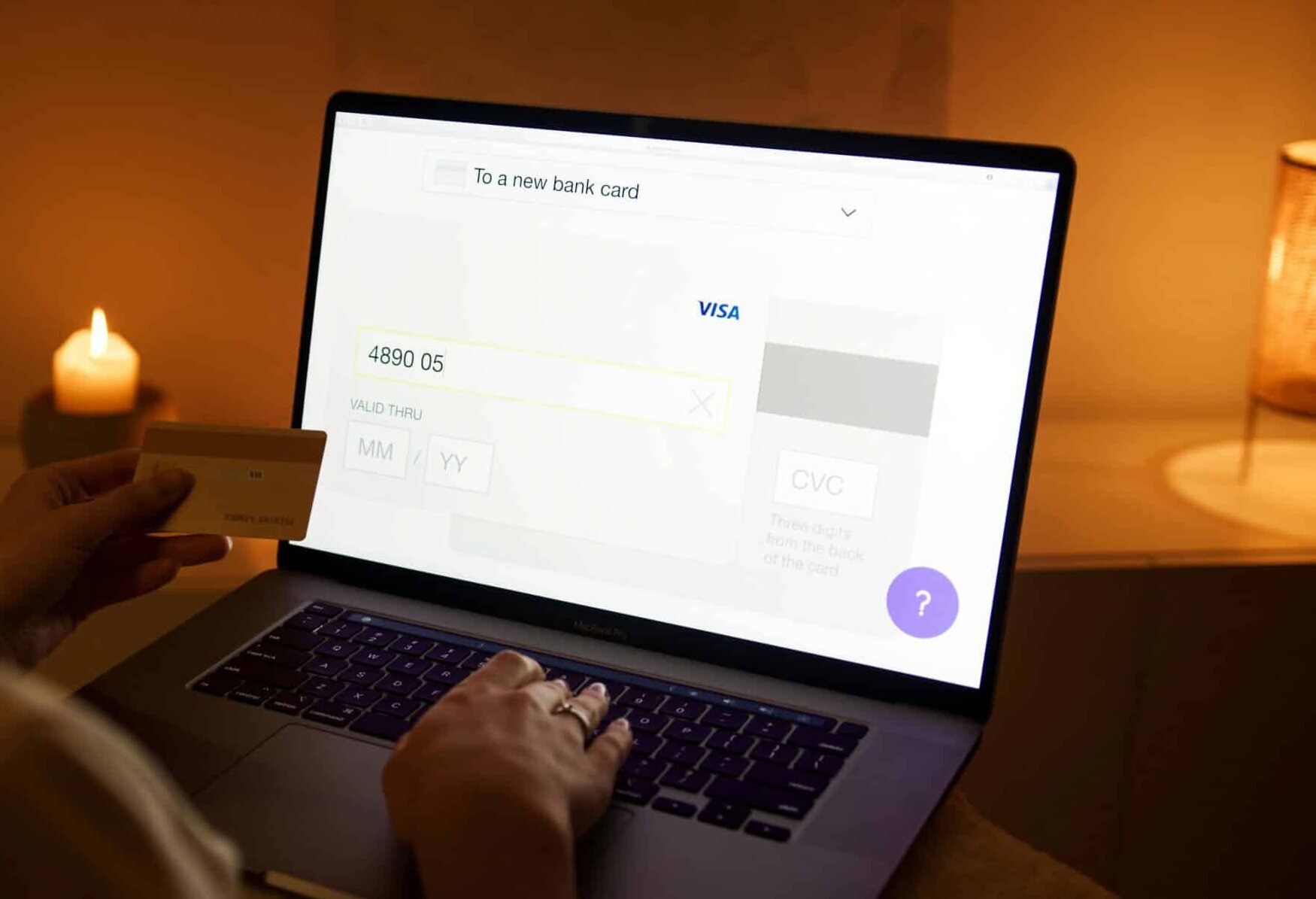

If you see “VBV” next to a payment, it means Verified by Visa, the original name Visa used for 3D Secure. Even though the brand has changed (to Visa Secure), you will often see VBV as the designation used. Understanding the meaning of VBV is essential, as it indicates the transaction used 3D Secure authentication, which reduces the likelihood of certain types of chargebacks.
How 3D Secure Works in 2026
3D Secure (3DS) is a protocol that allows merchants to confirm that the person using the card is the legitimate cardholder when the card is not present. Most of the time, authentication occurs in the background. Only higher-risk payments will require the customer to take a step up and complete a challenge to authenticate with the card’s bank. For merchants, 3D Secure is not just about stopping fraud. In many cases, it is about shifting the liability for certain forms of fraud when the conditions for that liability are met.
VBV Card Authentication: Where the VBV Card Step Fits
A “VBV card transaction” refers to a Visa card payment authenticated using the 3D Secure protocol. The authentication request is sent to the card’s issuing bank. The bank decides whether to process the transaction without friction or require challenge authentication. For sellers who work internationally or handle higher-risk traffic, VBV can give the issuing bank confidence to authorize the transaction. It also determines the outcome of any subsequent fraud dispute.
What Is VBV? (VBV Meaning Explained)
VBV stands for Verified by Visa, the original name Visa used for its 3D Secure program. VBV adds an extra layer of verification for online card payments. Even though Visa uses the term Visa Secure now, you may still encounter the abbreviation VBV. The meaning of VBV is the same in both instances. If a transaction is processed as a VBV transaction, it means that 3DS authentication was used for the Visa card.
When a transaction is processed as a VBV transaction, the payment can be approved by the customer’s bank either frictionlessly or as a challenge. For the merchant, this means a reduction in fraud-related chargeback disputes. Under the right circumstances, VBV also allows the merchant to take the liability for chargebacks related to fraud. While VBV doesn’t prevent chargebacks, it is one of the best ways to reduce chargeback disputes caused by customers not authorizing the transaction.
How 3D Secure and VBV Reduce Chargebacks
3D Secure helps reduce chargebacks in two main ways. First, it prevents some unauthorized transactions from ever being approved by the issuing bank. Second, if done properly, it provides some liability-shift protection for certain fraud-related chargebacks.
The part most merchants miss is that 3D Secure does not erase all chargebacks. It mainly reduces unauthorized fraud chargebacks, but chargebacks related to customer service issues will still occur, depending on your policies and service
Liability Shift Explained for VBV and 3D Secure
The liability shift is the concept that places the responsibility for chargebacks resulting from fraud on the card issuer if the 3D Secure authentication succeeds (or, in some cases, if the authentication attempt is properly made). This means that if a chargeback is filed for unauthorized fraud, the card issuer may be responsible if the 3D Secure data and indicators are correct.
It is important to have realistic expectations regarding the liability shift. The liability shift does not generally cover non-fraud disputes, and certain types of transactions may be ineligible. To ensure that using VBV provides the level of risk control that you require, confirm this with your processor.
VBV Meaning vs Visa Secure: Same Concept, Modern Packaging
The meaning of VBV remains that of 3D Secure authentication for a transaction made with a Visa card. The Visa Secure program is the more modern implementation using EMV 3DS. Many merchants will continue to use the term VBV, as it has been used in this capacity for many years.
The VBV is not a technology in its own right but a means of implementing 3D Secure on a Visa card. The best way to implement this protocol is to ensure your software sends the appropriate signals so that as many transactions as possible go through smoothly.
VBV Card Outcomes: What “Frictionless” and “Challenge” Mean
A frictionless flow indicates that the issuing bank approves the authentication request behind the scenes, without asking the customer to do anything. A challenge flow indicates that the bank is asking the customer to take some step-up action to confirm the transaction. Frictionless flow is ideal for conversion, though the challenge flow may be worth implementing in higher-risk situations to reduce fraud.
Common Mistakes That Make 3D Secure Less Effective
One of the most common mistakes is only using 3D Secure to shield you from chargebacks due to non-fraud disputes. Another is simply turning on 3D Secure without ensuring that your gateway properly stores and sends the information required to validate the transaction. Finally, merchants will find that the most detrimental mistake is failing to consider the customer experience in the context of 3D Secure.
How to Measure Whether VBV Is Actually Reducing Chargebacks
First, separate fraud chargebacks from non-fraud chargebacks. Then look at the difference between transactions that used 3DS and those that did not. Additionally, soft metrics such as chargeback support tickets can provide insight into potential disputes.
Look at the trend. If VBV has a lower fraud chargeback rate and the same conversion rate, then the program is working. However, if the conversion rate declines without a reduction in fraud chargebacks, it is likely that the VBV program is challenging too aggressively and delivering poor data to merchants.
Implementing 3D Secure and VBV for Real Chargeback Reduction
Send Complete Customer and Device Data
The 3D Secure protocol will work better for the card issuer if you send them customer and device data, such as the billing details, email, shipping address, device signals, and account history. This will increase the likelihood of a smooth transaction and decrease the chances of challenges. Better data means increased confidence from the card issuer in approving borderline transactions, which can reduce the number of declined transactions.
Use Risk-Based 3DS Instead of Blanket Challenges
Not every transaction requires a 3DS challenge. In fact, forcing challenges on all transactions can create a higher rate of failed transactions. Instead, use 3DS challenges to target higher-risk transactions, such as first-time buyers, orders with mismatched billing and shipping details, high ticket sizes, or traffic from risky sources. This is when 3DS will show its potential. Using 3DS in this way will help to reduce fraud and chargebacks.
Confirm Your Liability Shift Requirements With Your Processor
To ensure a successful liability shift, it is essential to confirm the exact nature and values of the fields that pass through your processor. Specifically, you will want to confirm the ECI values, authentication values, and the scheme values for your regions. If the data is not stored correctly, even if you successfully do 3DS, you will not gain the liability shift that you require. The point of VBV is not to have the VBV, but to have the correct proof.
Store the Evidence You Will Need Later
To prove that a transaction was authenticated when a fraud dispute arises, you will need to store the fields of authentication provided by your processor. You will also need to store the order and customer data. Having this ready will save you time when you have to represent to the customer and the payment provider.
Handle Recurring Billing Carefully
While it might seem convenient to use 3DS for all recurring billing, this is not the best approach. Most recurring billing is done through merchant-initiated transactions, and the rules for a liability shift are different. When setting up recurring billing, make it as easy and clear as possible for the customer to agree to the terms. The easier it is for a customer to cancel a subscription, the less likely they are to file a dispute.
Monitor VBV Card Results and Adjust Your Rules
As with all processes, 3DS requires regular monitoring. You should monitor the 3DS challenge and fraud dispute rates according to the different sources of traffic and customers. If you notice a high number of challenges from a particular group of customers, you can adjust your rules. If the number of fraud disputes is going up while 3DS is low, you should expand 3DS to better protect yourself from fraud.
FAQs
Q: What is the VBV meaning in payment processing?
A: The VBV meaning in payment processing is Verified by Visa. Many people do not realize that this is the old name for what is now known as Visa Secure. This authentication protocol is used to add an extra layer of security to online transactions and reduce cases of fraudulent authorization. The biggest benefit of this protocol is the shift in liability for fraudulent transactions.
Q: What is a VBV card transaction?
A: A VBV card transaction is a Visa card transaction that passes through 3D Secure authentication. Depending on the card type and the card issuer’s decision, there may be no additional steps involved. Or, the customer may be challenged to authenticate the transaction. This authentication protocol helps reduce fraudulent transactions and the chargebacks caused by them. This does not provide protection from chargebacks due to non-fraud-related issues, such as “not received.”
Q: Does 3D Secure eliminate chargebacks completely?
A: No, 3D Secure does not eliminate chargebacks. This protocol only helps with chargebacks resulting from unauthorized fraud. Other types of chargebacks, such as those resulting from customer service issues, will still occur. The best way to defend against chargebacks is to utilize 3D Secure and customer service resolution.
Q: Why do some 3DS transactions still get disputed?
A: Some 3DS transactions may be disputed for reasons that have no relation to fraudulent activity. For instance, customers may dispute if they are not satisfied with the product, if the refund has not been processed, or if the product was not delivered. Additionally, the shift in liability for fraud is not guaranteed if the transaction type is ineligible or if the 3D Secure data was not correctly stored. If you are finding that your dispute outcomes are not improving, make sure that the 3D Secure evidence fields are correct. From there, you can begin to work on the non-fraud-related disputes.
Conclusion
The value of 3D Secure and VBV is best derived when used as a performance and risk management tool. The meaning of VBV is that the transaction is authenticated via 3DS, and using the appropriate VBV and card strategy can reduce fraud-related chargebacks. When combined with appropriate risk-based authentication, evidence storage, and customer experience, 3D Secure can significantly reduce fraud-related chargebacks.
Sources
- EMVCo. “Optimising Online Payment Authentication with EMV 3-D Secure.” Accessed February 2026.
- Visa. “3D Secure: Your Guide to Safer Transactions.” Accessed February 2026.
- Adyen. “What Is the 3D Secure Liability Shift?” Accessed February 2026.
- Mastercard. “Chargeback Guide, Merchant Edition.” Accessed February 2026.
- Stripe. “3D Secure 101.” Accessed February 2026.
- U.S. Payments Forum. “EMV 3DS Mini-Series.” Accessed February 2026.