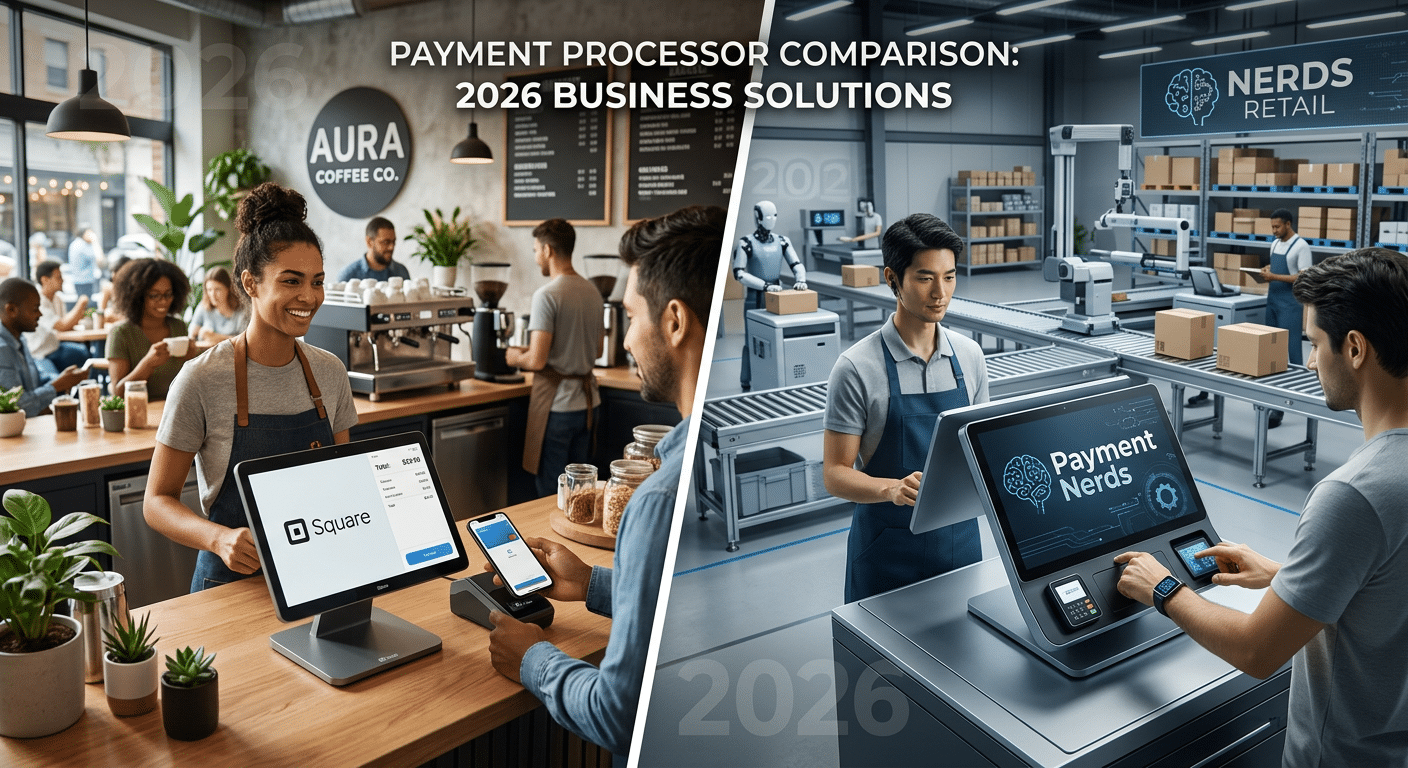



Essentially, a retail payment gateway is the layer that takes the transaction from your customer’s card or wallet, sends it to the processing network, and then returns the transaction response to you. In 2026, this will include handling critical tasks such as tokenization, fraud and authentication, and transmitting transaction data to your accounting and finance departments. If your payment gateway is weak, you will feel it during checkout. If it is strong, you and your customers will barely notice it.
Retail Payment Gateway Vs Processor Vs Retail POS System
A retail payment gateway is not the same as a processor. Additionally, it is not the same as a retail POS system. The payment processor is the financial entity that handles the transaction. The payment gateway is the system that processes transactions. The retail POS system is the software that manages the sales floor. While these three components may seem separate, they work together to create a seamless retail experience for the customer and the employee.
Features That Matter Most In Retail Payment Solutions
In the pursuit of creating great retail payment solutions, focus on essential features rather than additional ones. The speed at which customers can complete checkout is essential, as any delay can result in double-tapping and a need to contact support. The level of reliability a solution offers is also essential, as there could be spikes in activity on weekends and holidays. Finally, clarity in the customer payment experience is essential, as any confusion can lead to disputed charges and chargebacks due to unrecognized charges.
Integration Options For A Retail Payment Gateway
There are a few common ways to integrate a retail payment gateway. The best way to integrate a retail payment gateway into your business will depend on the extent to which you have customized your checkout and the number of sales channels you operate. If your POS and payment gateway are integrated, you can save time during the integration process. If you opt to integrate through the payment gateway’s API, you have more control over checkout customization and reporting. Finally, if your payment gateway uses connectors to ecommerce, invoicing, and order management software, you can take advantage of the quick deployment cycle that such integration offers
Security And Compliance In Retail Payment Solutions
Security is not just a technical requirement; it is a habit. Your retail payment gateway should support tokenization and secure handling of payment data to ensure that card data does not enter your internal systems. Your terminal should support chip and contactless payments to reduce fraud and meet customer expectations. Limiting access to those who can process refunds or change device settings reduces the risk of mistakes within your internal processes.
Cost Drivers In A Retail Payment Gateway Setup
The cost of a retail payment gateway is never just one line item. You pay for processing, the gateway, the hardware, and any operational costs if there are any issues. If the payment gateway increases the number of authorization attempts and disputes, it may be cheaper for the business despite the higher per-transaction cost. The best way to determine the cost to a retail business is to see the impact on the number of authorization attempts, refunds, and chargebacks.
Migration Plan For Switching Retail Payment Solutions
The best way to switch retail payment solutions is to test the different scenarios that a retail business may encounter. Whether it’s a sale, a refund, a return, a discount, or a partial payment, each scenario must be tested. Ensure that the receipts and the descriptors within the receipts are correct before switching to the new payment solution. In the first month after launch, monitor authorization and refund approvals, as well as the reasons for any disputes that occur each week.
Retail POS System Integration Blueprint
Device Management And Terminal Pairing
Ensure that your gateway has built-in device pairing with your POS and card-present device. This ensures that if you need to move devices between POS systems, the transaction will still be accepted. If you have multiple POS systems, ensure your devices are named and paired in a way that makes it easy for staff to understand which device is assigned to which POS system.
Inventory And SKU Context At The Transaction Level
The usefulness of a retail POS system is only as useful as the data that it collects and passes to your payment gateway. The gateway and POS must pass item context so that you can track which items are selling best and which ones are creating disputes.
Taxes, Tips, Discounts, And Promotions
The pricing of items that you offer to your customers can be affected by a range of factors. Your POS and gateway integration must handle taxes, discounts and promotions in a way that is consistent with how your customers experience your prices. If the application of discounts varies between devices, customers will notice, and you may get more refund requests and negative reviews. In the same way, if your POS and gateway handles scenarios that include tips, such as retail and service environments, you do not want to complicate the process.
Refunds, Returns, And Exchange Workflows
Refund management is one of the most significant differences between ordinary and excellent payment solutions for retail environments. A good POS system should provide staff with an easy way to issue refunds, process returns and document the reasons for refund requests. If staff cannot find the original transaction, they may resort to improvised methods that result in chargebacks.
Customer Profiles, Receipts, And Descriptor Consistency
Being able to recognize customers and having access to their receipt history is one of the best ways to prevent charge and dispute issues. Ensure that the store and receipt name matches the one that is reflected in the billing descriptor. If your retail POS system allows you to create customer profiles, you can quickly send them receipts and answer billing-related questions before the customer contacts their bank. This is critical if you operate multiple brands.
Reporting, Reconciliation, And Deposit Matching
The purpose of a payment gateway integration is ultimately to allow your business to easily deposit the funds that the customers have spent with you. Your finance and accounting departments need to be able to match the deposits to your bank and accounting software and also be able to trace any chargebacks, fees or refunds to the original transactions. If the funds that are deposited do not appear to match your expectations, you know that it is due to a missing reference or batched transactions.
FAQs
Q: What is a retail payment gateway, and do I need one if I have a retail POS system?
A: A retail payment gateway is responsible for moving the transaction from the retail POS to the payment processor. Most retail POS systems have the payment gateway built into the platform, but it is still a necessary component. You need this to keep your payments secure.
Q: What are the most important features in retail payment solutions?
A: The most important features in retail payment solutions are reliability, speed, and the ease of issuing refunds. A great retail payment solution will allow you to easily make deposits, access clear receipt information, and reference it when you need to.
Q: How does a retail POS system impact chargebacks and disputes?
A: A retail POS system will impact chargebacks and disputes through the receipt that is provided to the customer and the return policy. If the receipt is unclear or the process of getting a refund from the customer is difficult, then the customer is more likely to dispute the charge.
Q: When should a business consider implementing a more custom retail payment gateway?
A: A business should consider implementing a more custom retail payment gateway if it requires deep integration and control within the retail payment process. This might be ideal for high-volume retail environments. It might also be ideal for businesses with many retail locations. Additionally, if a business needs redundancy in its payment systems, a custom implementation is likely the best way to do it.
Conclusion
A great retail payment gateway makes it effortless for consumers and puts finance in the position of feeling confident. Retail payment solutions offer merchants fast authorizations, receipts, and refunds. The best retail POS systems and payment gateways work well together seamlessly. In 2026, retailers will focus on creating a cohesive system of retail terminals, POS systems, and payment gateways.