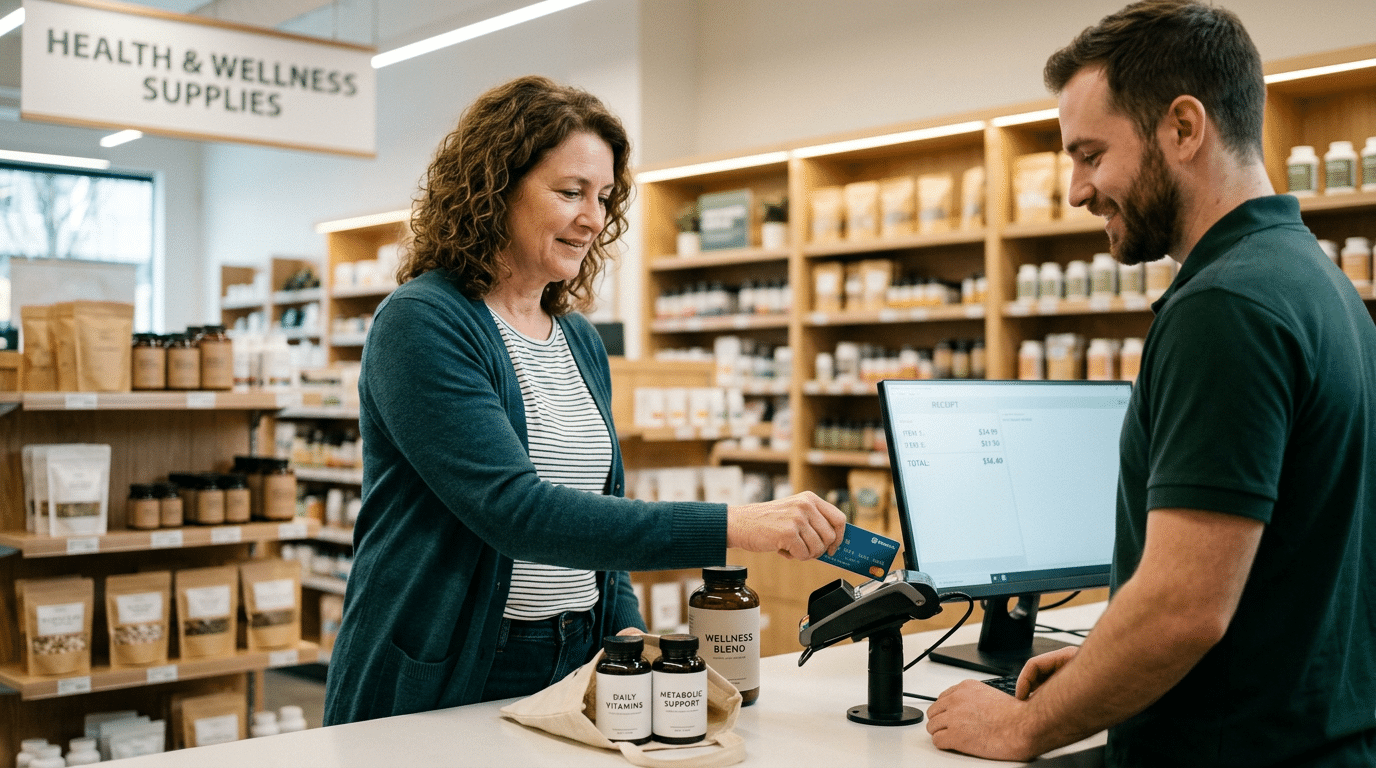


To get high-risk merchant processing for CBD and hemp oil, you apply through a high-risk provider that places your business with an acquiring bank that accepts hemp-derived CBD. You then connect the approved merchant account to a payment gateway your store supports and process within the monthly limit, reserve and dispute levels the bank sets. Mainstream platforms have mostly stepped away from the category, so a dedicated high-risk merchant account for CBD is now the normal way to take cards for tinctures, oils and topicals.
Where you start decides what matters most. If your Square account just went quiet after its October 15 deadline, or Stripe closed your account, you need processing back quickly without walking into the same problem twice. If you are about to launch your first CBD oil line, you have no processing history at all, and the account you open now will set your limits, your reserve and your costs for the first year. The steps are the same for both of you. The order you take them in, and what you watch after go-live, is where the difference shows.
The Short Version
- Square is winding down CBD, Shopify Payments excludes it and Stripe restricts it, so most CBD brands need their own high-risk merchant account.
- Setup takes five steps, from listing your products to a live test order.
- Hemp seed oil without CBD may be reviewed like food or skin care; any oil with CBD is underwritten as CBD.
- Budget for the reserve as well as the fees, because it can hold thousands of dollars of sales for months.
What Is a High-Risk Merchant Account for CBD?
A high-risk merchant account for CBD is a merchant account issued by an acquiring bank that has reviewed your hemp-derived products and agreed to process card payments for them, priced and monitored for the extra risk the category carries. The word high-risk describes how the bank classifies the category, not your business. CBD lands there because federal hemp rules keep changing, the FDA treats any CBD product sold with therapeutic claims as an unapproved drug, and repeat-order products draw more disputes than one-off retail sales.
The practical difference from a standard account is who stands behind the approval. Square, Stripe and Shopify Payments run aggregated accounts, where thousands of sellers share the platform’s own merchant account and an automated review decides who stays. That works well for low-risk retail, but the platform can close a whole category with one email. Square told sellers to remove CBD and hemp items by October 15, 2026. Shopify Payments does not support hemp or CBD products, and Stripe lists CBD with negligible THC as a restricted business that needs its review, while CBD with THC above the local limit, including CBD edibles, is prohibited. A high-risk CBD account gives you your own merchant ID, underwritten for your products before you go live.
| Standard platform account | High-risk CBD merchant account | |
|---|---|---|
| Who approves you | The platform’s automated review, often after you start selling | An underwriter at an acquiring bank that accepts hemp-derived CBD, before you go live |
| Account structure | One shared account across many sellers | Your own merchant ID, reviewed for your products and sales channels |
| CBD policy | Square winding down, Shopify Payments no, Stripe restricted | CBD is the category the bank agreed to process |
| Pricing | A flat published rate per sale | Priced on risk, with separate gateway and chargeback fees |
| Reserve | Can be imposed later if the platform flags risk | Often set at approval, typically 5 to 10 percent held for 90 to 180 days |
| Volume | No stated cap until reviews start | A monthly processing limit set from your statements and projections |
| Checkout | Built into the platform | A separate gateway connected to your store, terminal or invoices |
The trade-off is cost and paperwork in exchange for stability. A high-risk merchant account for CBD costs more per sale than a flat-rate platform and takes longer to open, but nobody can switch off your category overnight. Our CBD merchant account page explains how Payment Nerds sets these accounts up for hemp brands.
How Do You Get CBD Oil Merchant Processing Set Up?
CBD oil merchant processing is set up in five steps, and the paperwork is only the second of them. Most delays come from skipping the first step or rushing the last one.
Confirm what you sell
List every product, how it is made, and where you sell it: your own site, a marketplace, in person, by phone or on subscription. Banks approve products and channels, not just businesses, so anything left off this list is not covered later.
Gather your file
Lab reports, labels, statements and policies go in before the application does. Our CBD oil merchant account guide lists the full set of requirements and how underwriters read them.
Apply through a provider that works with CBD banks
A high-risk specialist knows which acquiring banks accept hemp-derived CBD and which product types each one takes. Our roundup of the best CBD merchant accounts compares the providers, and our guide to ecommerce merchant account providers for CBD covers the questions to ask them.
Review the terms before you sign
The approval arrives with a processing limit, a reserve if there is one, a fee schedule and a list of approved products. Each of those shapes your cash flow more than the headline rate does.
Connect and test
The merchant account is connected to a CBD payment gateway for your store, or to a terminal for in-person sales. Run a live test order and a refund before you send traffic.
If you are switching after a closure, keep the old account’s final statements and the closure notice, because the new bank will ask about them. If you are launching, apply before your launch date. Payment Nerds does not offer instant approval on high-risk accounts, and the review takes longer than a standard retail application.
Is Hemp Oil Merchant Processing Different From CBD Oil?
Hemp oil merchant processing is the same as CBD oil processing when the oil is extracted from the flower or leaf and contains CBD, and it can be much simpler when the product is hemp seed oil. The words hemp oil cover both products, and banks underwrite what is in the bottle, not the name on the label.
Hemp seed oil is pressed from the seeds, which do not naturally contain THC or CBD. In December 2018 the FDA completed its review of three GRAS notices for hemp seed ingredients, including hemp seed oil, so they can be sold in food for the uses described. A store selling only seed oil for cooking or skin care may not be treated as a CBD merchant at all. An extract sold as hemp oil that lists CBD content, or a full-spectrum oil with a cannabinoid profile on its lab report, is underwritten as CBD.
If your catalog has both, say so in the application and keep the product names honest. Labeling a CBD extract as plain hemp oil to avoid review is the kind of mismatch that ends accounts once the bank finds it. The 2026 federal hemp rules also apply to extract oils. Under Public Law 119-37, as amended by Public Law 119-103, final hemp-derived products are capped at 0.4 milligrams of total THC and similar cannabinoids per container from December 11, 2026. Full-spectrum oils need current lab results to stay on your approved list. Payment Nerds does not support marijuana, delta-8 or other THC products.
Which Payment Tools Does a CBD Oil Merchant Account Need?
A CBD oil merchant account needs tools that keep good orders flowing and stop bad ones before they become disputes. These six cover most hemp brands that sell online, in person or on repeat orders.
A Gateway That Fits Your Store
A gateway such as Authorize.Net or NMI that connects to Shopify, WooCommerce or your cart, with saved cards stored as tokens instead of card numbers.
Recurring Billing Done Right
Subscription billing with account updater and sensible retry timing, so refills keep running when cards expire or get reissued.
Fraud Screening at Checkout
Address and security-code checks, velocity limits and optional 3-D Secure, which screen card-not-present orders before they ship.
Dispute Alerts
Early warnings of a dispute let you refund before it becomes a chargeback, which keeps it out of your ratio in many cases.
A Billing Descriptor Customers Recognize
The name on the card statement should match your store name, so customers do not dispute a charge they simply failed to recognize.
In-Person and Phone Payments
A countertop or mobile terminal for markets and shops, and a virtual terminal for phone and wholesale orders on the same account.
What Does High-Risk CBD Processing Cost?
High-risk CBD processing costs more than a flat-rate platform in two ways: the fees you pay on each sale, and the money the bank holds back as a reserve. The fees are a cost. The reserve is your own money, delayed, and it often matters more to a young brand’s cash flow.
The fees usually have three layers. Interchange and card network fees are set by Visa, Mastercard and the other networks and are the same for every processor. The processor’s markup is where pricing for high-risk accounts differs, and it can be quoted as a flat percentage, tiers, or interchange-plus. Around those sit a gateway fee, a fee for each chargeback and sometimes a monthly account fee. Ask for every line in writing, and compare quotes on the same monthly volume and average order size. Our pricing page lists Payment Nerds’ published rates.
A rolling reserve holds a share of each payout, typically 5 to 10 percent, and releases it 90 to 180 days later. Here is what that means for a brand processing $40,000 a month:
~$24,000
held at peak with a 10% reserve kept for 180 days
~$6,000
held at peak with a 5% reserve kept for 90 days
That gap is why the reserve terms deserve as much attention as the rate. A clean record of low disputes is usually what gets a reserve reduced, so ask when it will be reviewed. The processing limit works the same way: it is set from your statements, and a steady track record is what raises it.
How Do You Keep CBD Merchant Processing Running After Approval?
You keep CBD merchant processing running by staying inside the account the bank approved: the same products, channels and volume, with disputes kept well below the card networks’ monitoring levels. The risk after approval is drift, where the business changes while the account still describes the business you applied with.
Disputes are the number banks watch most closely, and the thresholds tightened this year.
The dispute levels banks watch
Visa’s Acquirer Monitoring Program flags a U.S. merchant as excessive at 1.5 percent of fraud reports and disputes to settled sales, down from 2.2 percent since April 2026. Mastercard’s Excessive Chargeback Program, per acquirer guidance, starts at 100 chargebacks and 1.5 percent in a month. Your bank acts well before either number, so check your ratio every week.
Our chargeback prevention strategies for CBD ecommerce retailers cover the habits that keep that ratio low.
Subscriptions need extra care because every renewal is a fresh chance for a dispute. Clear consent at checkout, a reminder before each charge and a cancel option that actually works do most of the work, and our guide to recurring billing for CBD subscription boxes walks through the setup.
Tell your processor before the business changes, not after. A new product type, a big wholesale order or a second sales channel can look like risk when it arrives unannounced. If you add a second processor as a backup, disclose it to both. Our guide to keeping a CBD merchant account active covers the periodic reviews in more detail.
How Do You Answer a CBD Oil Chargeback?
Match your evidence to the reason the customer gave, and send it before your processor’s deadline. That deadline is usually shorter than the card network’s own window, because the processor needs time to review your file before it goes to the bank.
If the customer says the order never arrived, send tracking with delivery confirmation. If they say the oil was not as described, send the product page, the label and the lab report for that batch. If they did not recognize the charge, send the order email and show that your billing descriptor matches your store name. For a disputed subscription renewal, add the consent screen from checkout, the reminder you sent before the charge and your cancellation policy.
Not every dispute is worth fighting. When the evidence is thin, a refund issued after a dispute alert and before it becomes a chargeback costs less than a lost case and keeps it out of your ratio in many cases. Keep each order’s records together so a response takes minutes, not a day of searching.

High-Risk CBD Merchant Account FAQs
Q: Why is CBD considered high risk for payment processing?
A: Federal hemp rules keep changing, the FDA treats CBD sold with health claims as an unapproved drug, and repeat orders draw more disputes. Banks price and monitor the category more closely as a result.
Q: Which payment processor is best for CBD merchants?
A: A high-risk specialist that works with acquiring banks approving hemp-derived CBD, such as Payment Nerds. Square, Shopify Payments and Stripe either exclude or restrict CBD, so they are not a stable home for a CBD brand.
Q: Can I use PayPal for CBD oil sales?
A: PayPal’s US acceptable use policy does not mention CBD by name, so there is no published approval path. Use a dedicated CBD merchant account as your main way to take cards.
Q: Do I need a high-risk account to sell hemp seed oil?
A: Not always. The FDA allows hemp seed oil without CBD to be sold as a food ingredient, and banks may review it like ordinary food or skin care. Any oil that contains or advertises CBD is reviewed as CBD.
Q: How long does it take to start processing CBD payments?
A: It depends on your file, your history and the bank’s questions. High-risk approvals take longer than standard accounts, so apply well before a launch or a platform’s shutdown date.
Q: Does a CBD merchant account come with a reserve?
A: Often, yes. New high-risk accounts can carry a rolling reserve of 5 to 10 percent of volume for 90 to 180 days, which a steady record of low disputes can reduce.
Getting High-Risk Merchant Processing for Your CBD Oil Brand
Getting high-risk merchant processing for CBD and hemp oil comes down to choosing a bank that wants the category, knowing what you are signing, and running the account the way it was approved. If you are coming off Square or Stripe, that means a stable account you own. If you are launching, it means starting with terms you can grow into instead of renegotiating after your first busy month.
At Payment Nerds we set up CBD oil merchant processing for hemp-derived brands. We match you with an acquiring bank that accepts your products, explain the limit, reserve and fees before you sign, and connect the account to your store, terminal or subscription billing. Our CBD payment processing page shows the tools in more detail.
Sources
- U.S. Food and Drug Administration. “FDA Regulation of Cannabis and Cannabis-Derived Products, Including Cannabidiol (CBD).” Accessed October 2026.
- U.S. Food and Drug Administration. “FDA Responds to Three GRAS Notices for Hemp Seed-Derived Ingredients for Use in Human Food.” December 2018. Accessed October 2026.
- U.S. Congress. “Public Law 119-37” (hemp definition, Sec. 781). Accessed October 2026.
- U.S. Congress. “Public Law 119-103” (Sec. 2019, effective dates). Accessed October 2026.
- Stripe. “Prohibited and Restricted Businesses.” Updated September 22, 2026. Accessed October 2026.
- Shopify Help Center. “Hemp and payments.” Accessed October 2026.
- Marijuana Moment. “Square Tells Businesses To Stop Selling Hemp And CBD Products In Light Of Upcoming Federal Ban.” 2026. Accessed October 2026.
- Visa. “Visa Acquirer Monitoring Program Fact Sheet.” Accessed October 2026.
- PayPal. “Acceptable Use Policy” (United States). Accessed October 2026.
- Payment Nerds. “CBD Payment Processing for Hemp Brands.” Accessed October 2026.