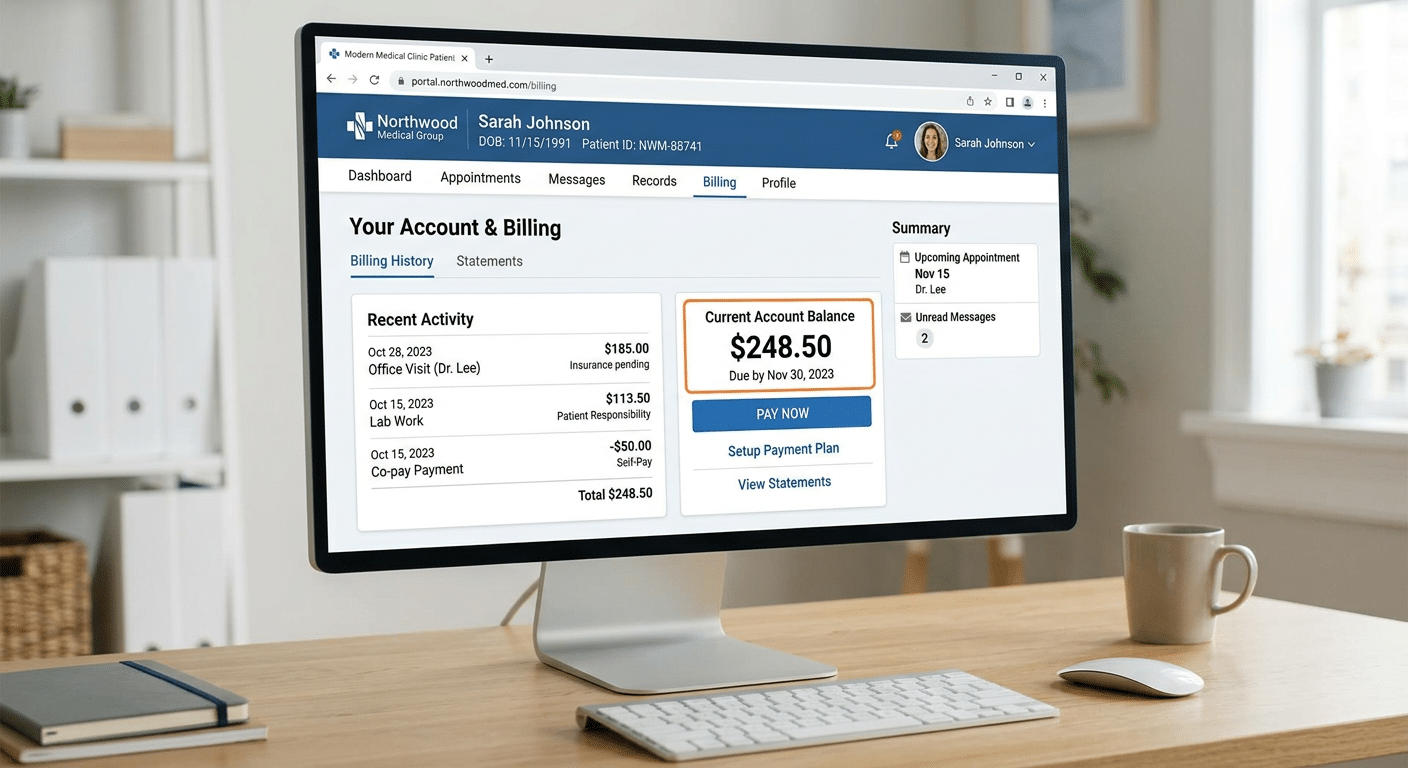



Integrated payment processing software connects the payment software to the systems that a business uses. Instead of performing the payment in one location, creating an invoice in another location, and reconciling bank deposits at a later date, the payment can be made directly to business systems such as POS, ecommerce, CRM, ERP, accounting, field service, or customer portal systems.
Payments impact a business in numerous ways, including cash flow, customer experience, reconciliation, fraud, reporting, chargebacks, and PCI compliance and merchant account issues. An integrated payment processing system should make it easier for both the customer and the business to perform payments after the transaction is complete.
Why Businesses Need Integrated Payment Processing
Businesses need an integrated payment processing solution because using disconnected payment systems creates unnecessary work for employees or staff members. Staff members will have to manually enter payments, reconcile invoices with deposits, and address accounting issues that will become increasingly costly as the business grows.
Businesses also need to consider how payment processing can affect their revenue. According to Baymard, the average documented cart abandonment rate for e-commerce websites is 70.19%. This means that the checkout and payment process directly impacts the revenue the business collects. By integrating payment processing with the business’s order, invoice, customer, and deposit records, businesses will save time and revenue.
Finally, if a business accepts online payments from customers who use Visa cards, it is exposed to risk under the VAMP program. VAMP, which stands for Visa Anti-Fraud Monitoring Program, has replaced the individual programs that previously monitored fraud payments and customer chargebacks. The VAMP ratio is the number of fraud and non-fraud disputes from Visa payments, divided by the total number of Visa transactions that settled. Because a business’s payment processing software is integrated into its systems, it should be able to monitor customer fraud and disputes.
Who Needs Integrated Payment Processing
This guide is most useful for the following business types:
- ecommerce businesses
- retail and restaurant businesses
- B2B companies
- field-service companies
- healthcare and professional service companies
- SaaS and marketplace companies
- subscription and membership companies
- companies using ERP and accounting software
- companies comparing merchant account services
- companies wanting to reduce manual reconciliation of sales and payments
If your business relies on any of the following elements, integrated payment processing is important: invoices, multiple locations, membership and subscription services, customer accounts, online purchases, field payments, and software integrations. While an integrated payment terminal can process payments, it typically does not include software integrations that automate the work around accepting those payments.
Integrated Payment Processing Options Compared
Integrated payment processing can mean different things depending on the business. Some companies need a basic accounting integration. Others need a gateway connected to ecommerce. Larger businesses may need embedded payments, ERP integration, or a platform that supports payments across multiple channels.
| Option | Best For | Main Strength | Main Tradeoff |
|---|---|---|---|
| POS-Integrated Payments | Retail, restaurant and in-person service businesses | Connects checkout, inventory, tips, receipts and reports | Best when the POS is the operational hub |
| Ecommerce Gateway Integration | Online stores and digital sellers | Connects checkout to orders, refunds and customer records | Needs fraud, chargeback and VAMP monitoring |
| Accounting or ERP Payment Integration | B2B, wholesale, distribution and professional services | Connects invoices, payments and reconciliation | Requires clean setup and data mapping |
| CRM or Field-Service Payment Integration | Contractors, agencies and appointment-based businesses | Connects payments to jobs, clients and service records | Needs staff training and permission controls |
| Embedded Payments for Platforms | SaaS, marketplaces and vertical software providers | Lets users accept payments inside the software | More underwriting, compliance and onboarding complexity |
| Merchant Account + Gateway Integration | Businesses that need more control over processor fit | More flexibility around risk, routing and reporting | More setup planning than all-in-one tools |
For most businesses, the right option depends on where the team already works. Payments should connect to the system that manages orders, invoices, appointments, accounts, or customer relationships.
Integrated Payment Processing Providers Compared
The best provider depends on whether the business needs merchant account support, ecommerce integration, ERP connectivity, embedded payments, or a broader payment strategy.
| Provider | Best Fit | Key Strength | Main Tradeoff |
|---|---|---|---|
| Payment Nerds | Businesses that need merchant account services, gateway guidance and integrated payment strategy | Strong fit for matching payments to business software, ACH, card processing, fraud controls, VAMP-aware monitoring and account stability | More consultative than a simple plug-and-play processor |
| Stripe | Online-first businesses, SaaS platforms and developer-led integrations | Strong APIs, global payment methods, Checkout, Billing and platform payment tools | May not fit every high-risk or restricted business model |
| NMI | Businesses, ISVs and partners that want gateway flexibility | Strong gateway layer for integrated, embedded, omnichannel and processor-connected payments | Requires the right acquirer or processor relationship |
| Authorize.net | Businesses that want a familiar gateway with broad software compatibility | Established gateway ecosystem, recurring billing, eCheck and customer profiles | Gateway tools do not replace merchant account fit |
| Versapay | B2B companies that need ERP-connected AR and invoice payments | Strong fit for invoice-to-cash, ERP integrations, customer portals and AR automation | More focused on B2B receivables than simple retail checkout |
| Worldpay for Platforms | Software companies and platforms embedding payments into user workflows | Embedded payments, PayFac models, compliance support and platform monetization | More complex than a basic merchant setup |
| ACI Worldwide | Larger merchants needing enterprise payment integration and reporting | Integrated payment platforms focused on centralizing payments and optimizing customer experience | Better suited to larger or more complex environments |
These are fit-based comparisons, not universal rankings. A contractor using field-service software, a wholesaler using an ERP and a SaaS platform embedding payments for customers all need different integrated payment setups.
Understanding VAMP for Integrated Payment Processing
VAMP indicates whether the integrated payment system makes it easier or harder for merchants to monitor fraud and chargebacks. VAMP stands for the program Visa runs to monitor fraud and chargebacks for merchants using its payment platform. The VAMP ratio measures the ratio of fraud and non-fraud chargebacks to the total number of Visa transactions settled between merchants and their customers.
Because the integrated payment system can track chargebacks to the specific order or invoice, merchants can better identify what is causing them. By identifying the specific cause of the chargebacks, merchants can remedy the issue without having to deal with chargebacks in the first place.
Another component of VAMP is the enumeration risk that is associated with the program. Enumeration risk refers to bots attempting to use stolen credit and debit card information during checkout on the website. The enumeration ratio measures the number of instances in which these bots attempt to use stolen card information relative to the total number of transactions on the website.
Visa uses a score called VAAI to gauge enumeration risk. Any payment system for ecommerce websites and portals should include features to monitor and control bots and attempted fraudulent transactions.
How to Implement Integrated Payment Processing in 2026
Start with the system of record. Determine whether the payments should be integrated with the POS, ecommerce platform, accounting software, ERP, CRM, field-service system, patient portal, customer portal, or subscription platform. The integration should follow the workflow that the employees use most often.
Next, decide on the merchant account and gateway. Depending on the nature of your business, you could use an all-in-one platform for your payments. Alternatively, you may require a separate merchant account and payment gateway.
- Follow these steps to set up an integrated payment platform:
- Map the payment workflow by channel
- Choose the merchant account and payment gateway
- Ensure the software is compatible with the merchant account and payment gateway
- Configure the accepted payment methods
- Configure tokenization and stored credentials
- Implement fraud controls, AVS, CVV and 3DS
- Implement Verifi, Ethoca, or chargeback alert tools if necessary
- Connect the payment platform to invoices, orders, customers and accounts
- Test the refund and chargeback functions
- Review the deposit, fees and reporting functionality
The most important step in the payment integration process is to thoroughly test the system. All platforms should be tested from the moment of payment request until the accounting reconciliation after the sale is complete.
How to Choose the Best Merchant Account Services for Integrated Payments
Assess your business type first. Each type of business requires a different kind of merchant account service. For example, a retail store requires a different level of support from a merchant account service provider than a subscription software company, an ecommerce business, a B2B company, or a healthcare business.
Compare merchant account providers based on the software and payment gateways they support, whether they offer ACH and card acceptance capabilities, virtual terminals, recurring billing, and payment links, and the support and features they offer for fraud detection and prevention and PCI compliance.
Ask whether the provider can assist with monitoring for fraud issues like TC40 reports, TC15 reports, chargebacks, enumeration attacks, Above Standard risk, and Excessive risk so that they are dealt with before the merchant and their merchant account provider are both negatively impacted.
Integrated Payment Processing Costs Explained
Integrating a payment processor incurs costs related to the provider, the specific payment methods used, the monthly volume of payments to be processed, the ticket (value) of each payment, and the software to be integrated with the selected payment processor.
Payment processor costs usually include transaction fees, monthly fees, gateway fees, software fees, implementation fees, chargeback fees, and PCI-related costs.
However, rather than focusing on the payment processor’s cost, it is more important to consider the total operating cost of the business with that processor. For example, a cheaper payment processor may result in staff members spending hours every month reconciling payments, customers abandoning the purchasing process, subscription payments failing, and a lack of visibility into payment chargebacks and disputes.
Tools related to VAMP can also impact the total cost of a payment processor. Tools like Verifi, Ethoca, 3DS, and fraud filters increase the cost to the payment processor, but they can also reduce the number of chargebacks and fraud payment reports the business must deal with. For businesses that receive many payments that do not use cards, this function is more valuable than the slightly lower rate for payments that do use cards.
Common Integrated Payment Processing Mistakes to Avoid
The biggest mistake many merchants make when integrating payment processors is treating it as a purely technical project. While the technical aspects of integration are important, many other factors related to the merchant and the business must be considered for the payment integration to be successful.
Another mistake is focusing on the software integration before determining if the merchant has the appropriate merchant account. The processor and merchant account must be compatible with the business to ensure the integration does not create problems for the merchant’s accounts.
Finally, merchants who ignore the VAMP scores of their merchant accounts are making an avoidable mistake. Merchants who receive high VAMP scores for card-not-present transactions incur fees from their merchant accounts. Payment integration software can help merchants monitor their VAMP scores to ensure they do not exceed the threshold set by payment processing companies.
Key Features to Look for in Integrated Payment Processing
Merchant Account and Gateway Fit
Integrated payment processing still depends on having the right merchant account and gateway. The gateway will allow your payment data to go between your software and your processor. The merchant account is the processing relationship that will allow your business to accept payments and receive its funds. Having the best software integration does not mean that your merchant account and gateway are a good fit for your business. High ticket sizes, regulated products or chargebacks may require different services from your merchant account provider than a small business with lower sales and fewer payment issues.
Software and Data Flow Integration
One of the most important features of integrated payment processing software is data flow integration between the two systems. When a customer makes a payment through your business software, that payment should be instantly visible in your merchant account software and linked to the correct order, appointment, subscription, claim, project, ticket or customer account. Being able to see all payments within your software without having to manually match payments to software orders is half the deal with integrated payment processing software.
Multi-Channel Payment Support
Many businesses receive payments through more than one channel. Customers may input their credit card information online, in person, through a portal, over the phone, through an invoice, or through ACH payments. Your software should support all of these channels so that all payments are visible in one place and no money is lost to failed payments. Your finance or operations teams should be able to see all payments that pass through your business, no matter where they originated from.
Fraud, Chargeback and VAMP Monitoring
Another feature of an integrated payment processing software system should be a focus on fraud and chargebacks. VAMP, the fraud and chargeback monitoring program run by Visa, can help your business to track and manage all of its payment-related fraud and disputes. Visa’s report on fraud activities, known as the TC40 report, and its chargeback report, known as the TC15 report, help to show how many fraud and chargeback occurrences a business has had during a reporting period. These reports impact the risk level of your merchant account. A strong payment processing software integration will allow your business to track all fraud activities and payments through built-in tools like Verifi, Ethoca, 3DS and fraud payment filters to avoid chargebacks and protect your merchant account.
PCI and Payment Security Controls
Payment security is still something to consider with integrated payment processing software. The PCI Security Standards Council states that creating a strong foundation for data security involves the people, processes and technology of a company. An integrated payment processing software reduces the amount of data and exposure of your business to credit card information by moving all data to hosted pages, tokenization and other security features.
Reporting, Reconciliation, and Payment Visibility Features
Another major benefit of using integrated payment processing software is that your business will find it easier to reconcile its payments software with its accounting software. All deposits, refunds, fees and chargebacks will appear in the correct software and be linked to the relevant business accounts. This feature is essential for small businesses with customers who are also businesses (B2B), healthcare businesses, professional services, subscription services and retail or multi-location businesses. A strong payment processing software makes for easier reporting and allows business owners to have better control over their finances.
FAQs About Integrated Payment Processing
Q: What is integrated payment processing?
A: Integrated payment processing connects the receipt of payments to the software that businesses use in their operations. This could include point-of-sale (POS) software, ecommerce software, enterprise resource planning (ERP) software, customer relationship management (CRM) software, accounting software, field-service software, or any other software used by a business.
Q: Why do businesses use integrated payments?
A: Businesses use integrated payments to reduce manual entry, speed up the checkout process, connect payments with outstanding invoices, and gain greater visibility into their financial operations.
Q: What are merchant account services?
A: Merchant account services allow a business to accept a variety of payments into its business account. These could include credit and debit cards, automated clearing house (ACH) transactions, online transactions, invoice payments, POS payments, MOTO payments, and recurring payments.
Q: What is the difference between a payment gateway and integrated payment processing?
A: A payment gateway is the technology that transmits payment information from a payment application to the merchant’s merchant account services. Integrated payment processing connects that transaction to the software systems that manage the business.
Q: What is VAMP, and how is it related to integrated payments?
A: VAMP stands for Visa’s automated fraud and dispute monitoring program. The VAMP ratio is the number of fraudulent transactions and non-fraudulent disputes divided by the total number of settled Visa transactions for a merchant; an important metric to monitor for merchants using integrated payment processing solutions.
Q: What is an enumeration attack?
A: An enumeration attack uses bots to repeatedly attempt to enter credit card information on a checkout page for a business website. The attacks are typically initiated by fraudsters who attempt to use stolen credit card information. An integrated ecommerce payment system should include built-in bot controls to limit the impact of these attacks.
Q: How should a business choose an integrated merchant account service provider?
A: A business should first determine which software application and payment methods they will use within their operations. Then they can choose a merchant account services provider that supports the type of business they run.
Conclusion
Consideration of the payment lifecycle – from the initial start of the payment process through to the reconciliation of accounts – will yield the best results for your software. You want to focus on the usefulness of the payment data to your software, not just on accepting payments within it.
If you are looking for merchant account services or need to integrate payment processing with your software, Payment Nerds can help you evaluate which option is best for your business. You want to find a process that is easy to run, easy to reconcile, and easy to maintain as your business continues to grow.
Sources
- Payment Nerds. “Integrated Payment Processing: Connect Your Business Software and Systems.” Accessed May 2026.
- Payment Nerds. “Connected Payments.” Accessed May 2026.
- Stripe. “Payment Methods API.” Accessed May 2026.
- Stripe. “Global Payment Processing Platform.” Accessed May 2026.
- Baymard Institute. “Cart & Checkout Usability Research.” Accessed May 2026.
- Versapay. “ERP Payment Integrations.” Accessed May 2026.
- ACI Worldwide. “Integrated Payment Processing.” Accessed May 2026.
- Worldpay. “Worldpay for Platforms.” Accessed May 2026.
- NMI. “Full Commerce Enablement: Payments Across All Channels.” Accessed May 2026.
- Visa. “Visa Acquirer Monitoring Program Fact Sheet.” Accessed May 2026.
- PCI Security Standards Council. “Merchant Resources.” Accessed May 2026.