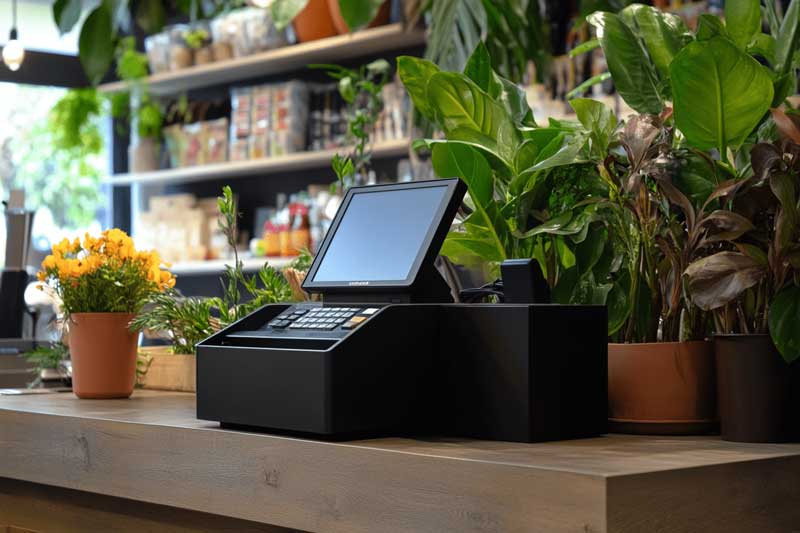



Payment terminals used to be simple devices that allowed stores to accept credit and debit cards at the sales counter. Today, several types of terminal hardware are available to help businesses manage their payments. These include handheld POS devices, mobile card readers, countertop POS systems, Tap to Pay phone systems, customer display screens, PIN pads, and devices that integrate with business software.
Given the variety of available POS hardware, it is important for organizations to carefully consider which type of payment terminal best suits their business and operational needs. A payment terminal should accommodate the different payment methods customers use while also supporting the processes and systems the business uses.
Why Businesses Need Specialized Payment Terminal Hardware Solutions
Businesses need better terminal hardware to process in-person sales, as there are different ways to accept customer payments. These can include payments at the store’s counter, tables, handheld devices, mobile devices, and in-store, but initiated online.
Mobile and software-based sales are increasing rapidly. For instance, Visa recently announced that the number of businesses adopting Tap to Phone payment systems increased by 200% compared with the same period last year. While this does not mean that every business should replace their POS hardware with mobile-only solutions, it does mean that there are additional requirements for the hardware that they use to take sales payments.
Additionally, for businesses that also use ecommerce sales of any kind, including e-invoicing or payment links, the VAMP ratio may also factor into purchasing decisions regarding POS hardware. VAMP stands for Visa Anti-fraud Monitoring and Prevention and is used to monitor fraud and non-fraud disputes for all sales transactions. This program replaced two separate Visa programs that monitored fraud transactions and chargebacks separately. The VAMP ratio is calculated as the number of fraudulent and non-fraudulent disputes divided by the total number of Visa transactions settled by merchants. Every business should have insight into the fraud and dispute transactions for all sales channels – in-store or online.
Who Should Use This Payment Terminal Guide
The following types of businesses will find this guide most useful:
- retail stores
- restaurants and cafes
- mobile service businesses
- contractors
- medical, dental and wellness offices
- professional service firms
- pop-up shops
- multi-location businesses
- ecommerce brands with in-person retail locations
- businesses comparing payment terminal providers
The more your business depends on in-person checkout, mobile payments, contactless acceptance, inventory, tips, invoices, refunds, customer profiles, or multi-location reporting, the more important hardware fit becomes. A cheap reader can process a card, but it may not support the workflow your team needs every day.
Payment Terminal Hardware Solutions Compared
The best payment terminal depends on where payments occur and what data needs to be transferred after the sale. A small vendor may only need Tap to Pay on a phone, while a busy retailer may need registers, handhelds, scanners and gateway-connected reporting.
| Terminal Hardware Type | Best For | Main Strength | Main Tradeoff |
|---|---|---|---|
| Countertop Payment Terminal | Retail counters, offices and fixed checkout areas | Reliable chip, tap and swipe acceptance | Less flexible for mobile selling |
| Smart Terminal | Retail, restaurants and service businesses needing apps and receipts | Combines payments, screen, printer and POS features | Costs more than a basic card reader |
| Handheld POS Terminal | Restaurants, events, pop-ups and floor selling | Lets staff take payments away from the counter | Requires device management and training |
| Mobile Card Reader | Small businesses and occasional in-person payments | Low-cost way to accept cards through a phone or tablet | Limited workflow and receipt options |
| Tap to Pay on Phone | Mobile sellers and simple checkout environments | No separate reader required on compatible devices | Best for simpler transaction flows |
| Customer-Facing PIN Pad or Display | Retailers with existing POS registers | Separates staff-facing POS from customer payment entry | Needs POS and processor compatibility |
| Integrated POS Terminal System | Multi-location or operations-heavy businesses | Connects payments to inventory, staff, reporting and accounting | More setup work upfront |
For most businesses, hardware should be chosen after the workflow is mapped. Start with how customers pay, where staff take payments and where payment records need to land.
Best Payment Terminal Hardware and Provider Options Compared
The best provider depends on whether the business needs simple hardware, flexible merchant account services, integrated POS features, mobile terminals, or developer-friendly in-person payments.
| Provider or Hardware Option | Best Fit | Key Strength | Main Tradeoff |
|---|---|---|---|
| Payment Nerds | Businesses that need terminal hardware guidance, merchant account services and connected payment strategy | Strong fit for matching terminals to POS, gateway, ACH, online payments, high-risk support, chargeback prevention and VAMP-aware monitoring | More consultative than buying a device directly from a self-serve platform |
| Square Terminal | Small retailers, service businesses and pop-ups that want simple all-in-one hardware | Easy setup, built-in receipts and approachable pricing | Less flexible for complex underwriting or high-risk categories |
| Clover Flex | Restaurants, retail stores and mobile staff that need handheld POS features | Portable device with touchscreen, printer, camera/barcode scanner and tap, dip, swipe support | Hardware and software fit depend on processor setup |
| Stripe Terminal | Online-first businesses and platforms building custom in-person payment flows | Strong developer tools, unified online and in-person payments and smart reader options | Not ideal for every restricted or high-risk business model |
| Shopify POS Terminal | Retailers already using Shopify for ecommerce and in-store selling | Strong online-to-offline connection inside the Shopify ecosystem | Best fit when Shopify Payments and Shopify POS are appropriate |
| NMI-Compatible Terminals | Merchants, ISVs and partners needing processor flexibility | Gateway flexibility across in-person, online and mobile workflows | Requires the right acquiring relationship and integration setup |
| Verifone or Ingenico Devices Through a Processor | Larger retailers, enterprises and processor-led deployments | Durable, widely used payment terminal hardware options | Setup depends heavily on processor, POS and certification path |
These are fit-based comparisons, not universal rankings. A single-location boutique, a multi-lane retailer, a contractor, a restaurant and a high-risk merchant may all need different terminal hardware.
Understanding VAMP for Payment Terminal Setups
VAMP becomes most relevant for businesses that already have online sales. VAMP stands for Visa’s fraud and dispute monitoring program. The VAMP ratio measures the number of instances of fraud and non-fraud disputes relative to the total number of Visa transactions that settled.
If your business is mostly in-person, there are fewer disputes from payment terminal transactions than ecommerce sales. However, if you receive online sales, VAMP will become more relevant to your payment terminal transactions.
VAMP also includes enumeration attacks. Enumeration attacks use bots to test credit card numbers on an online checkout page. The enumeration attack ratio measures the number of suspected enumeration attacks relative to the total number of transactions. Visa uses VAAI (Visa Account Attack Intelligence) as a score to detect enumeration attacks on checkout pages. A payment terminal will not stop bots from completing checkout forms. Therefore, if a business has online sales, it will need a payment gateway with bot protection filters.
How to Choose the Right Payment Terminal Hardware in 2026
Where do your customers pay? If they pay at a fixed counter, a countertop, or a POS terminal, any of these will work. Handheld terminals or Tap to Pay systems work for businesses where staff move around the sales floor. Payment terminals that work well for both online and in-person sales will also work with your gateway and merchant account.
Here are some features to consider when comparing payment terminals:
- tap, chip, swipe and wallet payments support
- receipt printer needs
- barcode scanner and camera needs
- Wi-Fi, Ethernet and cellular connectivity
- battery life and durability
- POS and ecommerce store compatibility
- ability to issue refunds and void payments
- ability to take tips, taxes and discounts
- user permissions
- PCI-aware hardware and software
- reporting and merchant account visibility
- merchant account and payment processor compatibility
The best terminal for your business will depend on how customers pay after the sale.
Payment Terminal Costs Explained
There are a variety of factors that will affect the cost of payment terminals. Factors to consider include the type of device you choose to purchase, who provides the terminal and its software, your merchant account and processing fees, and the processing rate and gateway that your terminal will use. Devices range in cost from very low-cost mobile payment terminals to smart terminals, handheld POS devices, and register devices that cost more.
Costs to consider include the purchase or lease of the device, POS software, transaction fees, gateway fees, receipt printers, stands, docks, barcode scanners, cash drawers, chargeback fees, and PCI-related support costs. Most of these costs will be visible if you review the terms of your merchant account provider’s contract, which also covers the purchase of devices.
While it is important to consider the cost of payment devices for your business, it is even more important to consider the total operating cost of the devices. A cheaper payment terminal is not a better payment terminal if it slows your checkout process, does not connect to your POS software, does not provide easy methods for handling refunds, produces poor sales and transaction reporting for your business, or locks your business into a processing provider that you do not want to work with.
Common Payment Terminal Setup Mistakes to Avoid
The biggest mistake when setting up a payment terminal is selecting the correct hardware before determining the payment strategy. The hardware may look good for the store, but it has to match the merchant account, POS software, and payment gateway.
Buying a payment terminal today without considering the business’s growth is also a mistake. When the business starts with one POS terminal, it may expand into ecommerce, mobile events, delivery, and subscriptions across different locations. The POS hardware may need to be replaced once they hit that growth phase.
The third mistake is to ignore VAMP and online payment risks when you have an omnichannel business. You can have great payment terminal hardware in your brick-and-mortar stores for in-person payments, but then have poor payment forms online. If there are online fraud reports, the merchant account can be under significant pressure.
Key Features to Look for in Payment Terminal Hardware
Contactless and Chip Acceptance
cards and mobile wallets (such as Apple Pay and Google Pay). Contactless payment hardware acceptance is crucial in retail and other service environments where customers may use contactless payments.
Connectivity and Mobility
Countertop payment terminals use Wi-Fi and/or Ethernet connections. Handheld payment terminals use Wi-Fi and/or cellular data connections with long battery life. Mobility in payment terminals is essential for restaurants, contractors, delivery services, home services, medical facilities, and trade shows and pop-up stands.
POS and Gateway Compatibility
Payment terminal hardware should connect to the organization’s existing point-of-sale (POS) and payment gateway software. The POS and payment gateway software control the merchant’s sales, tips, taxes, and more. A payment terminal software that connects to software other than the organization’s existing POS and payment gateway may be easier to use and less complex but limit the organization’s ability to integrate with other software.
Security, PCI Compliance, and Tokenization
Security features must be part of a payment terminal hardware and software package. The PCI Security Standards Council develops security standards and software for merchants and payment terminal manufacturers. Tokenization allows payment terminal software to store a safer token instead of the customer’s raw card data. This is helpful for organizations that offer refunds and allow customers to save their cards in their accounts for repeat purchases.
Reporting and Reconciliation
A good payment terminal hardware and software package should make it easier for the business owner to track and manage the business’s sales. A payment terminal should generate reports that show the sales performance of the organization and allow for reconciliation of sales and deposits. This feature matters for multi-location businesses or organizations that take payments online and in-person from customers. Otherwise, the payment terminal will create another payment silo that will not connect with other sales records.
Fraud, Chargeback, and VAMP Visibility
Businesses that take payments in-person also take payments online from their websites or ecommerce applications. They may also use payment links, invoices, or subscriptions from third-party applications. In such cases, being able to see fraud and payment disputes between in-person and online payments is crucial. VAMP allows merchants to view fraud and payment disputes from all channels. The TC40 is the number of fraud transactions on the payment terminal. The TC15 is the number of payment or chargeback disputes on the payment terminal. By having this feature, merchants can monitor and identify where most of their payment fraud and disputes originate so they can take appropriate action.
FAQs About Payment Terminal Hardware
Q: What is a payment terminal?
A: A payment terminal is hardware that allows a business to take card and contactless payments from customers in person. They often support tap, chip, swipe cards, take PINs and digital wallets, and can print receipts and connect to a POS system.
Q: What is POS terminal hardware?
A: POS terminal hardware refers to the hardware devices used in the point-of-sale industry. These can include card readers, smart terminals, handheld devices, PIN pads, display screens for customers, receipt printers and POS registers.
Q: What is the best payment terminal for small businesses?
A: The best payment terminal for small business owners is the Square Terminal, Clover Flex, Tap to Pay, or another terminal supported by Payment Nerds, depending on their existing POS systems.
Q: Do businesses still need countertop payment terminals?
A: Many small businesses and merchants still require countertop payment terminals. These are essential for businesses with fixed locations. They can also offer mobile and tap-to-pay options, but they will not replace countertop payment terminals for all businesses.
Q: What is the difference between a payment terminal and a POS system?
A: A payment terminal will accept the customer’s payments. A POS system will manage the business’s products, orders, taxes, inventory, receipts, employees, refunds, and reporting.
Q: What is VAMP, and why could it matter for terminal hardware?
A: VAMP is Visa’s combined fraud and dispute monitoring program. It matters when terminal payments are part of a broader setup that also includes online, invoice, MOTO, or card-not-present transactions, where fraud and disputes need to be monitored.
Q: How should businesses choose terminal hardware?
A: Businesses should compare payment methods, connectivity, mobility, POS compatibility, security, reporting, processor fit, support needs and whether the hardware can grow with online, mobile, or multi-location payment channels.
Conclusion
The best payment terminal for your business is not necessarily the one with the newest technology or the lowest price tag. The best payment terminal for your business is one that fits how you take payments and how your business integrates with your other operations.
If you need assistance with POS terminal hardware, payment terminal, or terminal hardware in relation to a merchant account, the Payment Nerds can assist you with that decision. It’s not enough to just have a way to take payments in person. You need a system that works for your entire business.
Sources
- Payment Nerds. “Terminal Hardware Payment Solutions.” Accessed May 2026.
- Payment Nerds. “Connected Payments.” Accessed May 2026.
- Payment Nerds. “Contactless Payment Solutions for Retail: Hardware & Setup Guide.” Accessed May 2026.
- Visa. “Visa Tap to Phone Adoption Soars: 200% Year-over-Year Growth Worldwide.” Accessed May 2026.
- PCI Security Standards Council. “Official PCI Security Standards Council Site.” Accessed May 2026.
- PCI Security Standards Council. “Secure Technology.” Accessed May 2026.
- Square. “Credit Card Terminal.” Accessed May 2026.
- Clover. “Clover Flex: Handheld POS System.” Accessed May 2026.
- Stripe. “Stripe Terminal.” Accessed May 2026.
- Stripe. “BBPOS WisePOS E.” Accessed May 2026.
- Shopify. “POS Terminal.” Accessed May 2026.
- Shopify. “Setting Up POS Terminal.” Accessed May 2026.
- NMI. “Full Commerce Enablement.” Accessed May 2026.
- Verifone. “Global Payment Solutions & Processing Platform.” Accessed May 2026.
- Visa. “Visa Acquirer Monitoring Program Fact Sheet.” Accessed May 2026.