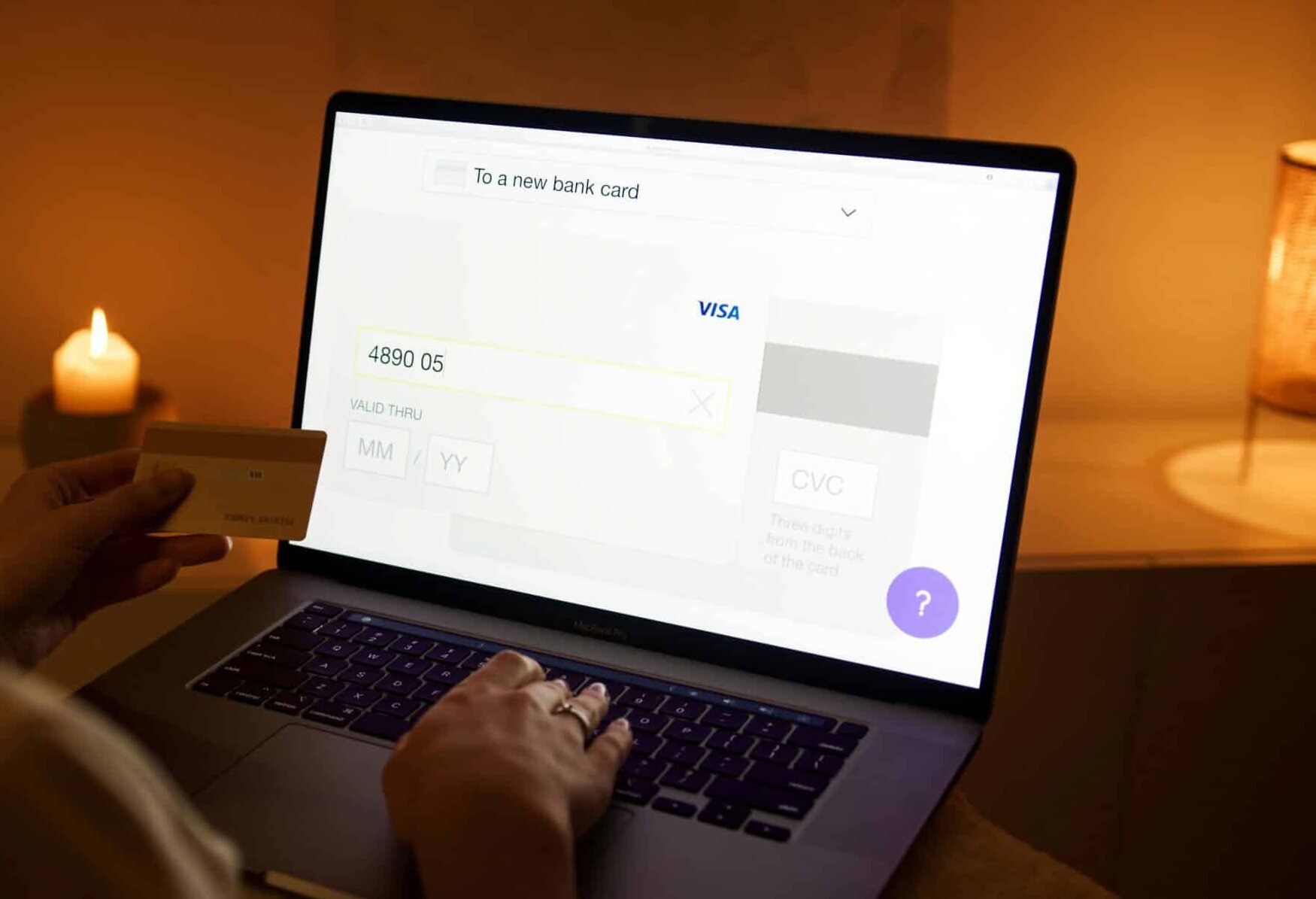



ACH payments can be ideal for high-risk merchants with high processing costs or very limited card payment processing options. However, ACH payments are not inherently low-risk. High-risk merchants can face numerous account problems due to failed ACH payments, unauthorized returns, and invalid account data.
One way high-risk merchants can reduce these issues is by understanding the various ACH return codes. These return codes will tell the merchant why their bank payment failed. By understanding the codes, the merchant and the bank can ensure that their payment processing is working as it should. Adding bank payments to a company is not enough to ensure effective ACH payment processing; merchants also have a responsibility to monitor potential issues and resolve them before they cause further problems.
Why High-Risk Merchants Need Specialized ACH Payment Processing
ACH payment volumes are growing. According to Nacha, the ACH Network processed 35.2 billion ACH payments totaling $93 trillion in 2025. That total includes 1.4 billion Same Day ACH Payments for $3.9 trillion. Such high levels of ACH payments can be a suitable solution for high-risk merchants looking to process payments.
ACH payment failures pose a challenge for high-risk merchants. Nacha allows 0.5% of all ACH payments to be unauthorized debits. Any administrative returns or failed ACH payments above the threshold can expose high-risk merchants to additional scrutiny from ACH payment processors. High levels of unauthorized ACH debits can signal to payment processors that a merchant collects payments inefficiently or experiences a high number of customer payment failures.
There is no VAMP ratio for ACH payments, as VAMP is not responsible for them. However, since most merchants use ACH, credit, and debit cards, high-risk merchants must monitor their VAMP ratio. The VAMP ratio measures the number of fraudulent transactions and non-fraud disputes divided by the total number of transactions processed by a merchant using Visa cards. If a merchant has poor authorization practices for ACH payments, it can pose the same issues for those merchants regarding the VAMP ratio as it does for credit and debit card transactions.
Who Should Use This ACH Return Code Guide
This guide is most useful for:
- high-risk ecommerce merchants
- subscription and continuity businesses
- debt relief and credit repair companies
- B2B merchants collecting large invoices
- digital goods and software sellers
- healthcare, legal and professional service firms
- property management and rent-collection businesses
- lenders, servicers and finance companies
- merchants using ACH as a backup to card processing
- businesses with rising ACH returns, failed payments, or account reviews
The more your business depends on recurring debits, high-ticket payments, online authorizations, bank-account billing, or customers under financial stress, the more important ACH return-code management becomes. ACH can reduce reliance on cards, but it should not be treated as a risk-free workaround.
ACH Return Code Categories Explained
ACH return codes are not all the same. Some failures are caused by insufficient funds. Others point to bad account data, revoked authorization, customer disputes, or processor-side issues. High-risk merchants need to group returns by cause instead of treating every failed ACH payment as a generic decline.
| Failure Type | Common Return Codes | What It Usually Means | What Merchants Should Fix |
|---|---|---|---|
| Funding Problem | R01, R09 | The account does not have enough available or collected funds | Retry timing, customer notices and payment scheduling |
| Account Data Problem | R02, R03, R04 | The account is closed, cannot be located, or has invalid account structure | Account validation and customer data collection |
| Authorization Problem | R07, R10, R29 | The customer or business says the debit was not authorized or authorization was revoked | Consent language, stored records and cancellation workflows |
| Stop Payment | R08 | The customer told the bank to stop the payment | Customer support and billing-dispute resolution |
| Corporate Account Issue | R29, R31 | A business account disputes or rejects the debit | B2B authorization and account-type controls |
| Retry or Reinitiation Problem | Often tied to repeated failed returns | The merchant is retrying payments incorrectly or too aggressively | Retry rules, payment labels and return-code logic |
For high-risk merchants, the pattern matters more than one isolated return. A single R01 may be ordinary. A steady stream of R10 or R29 returns indicates that customers do not understand, remember, or accept the payment authorization. That is a much bigger processor concern.
Best ACH Payment Processing Providers for High-Risk Merchants (2026)
The best provider depends on whether the merchant needs high-risk underwriting, recurring billing, account validation, ACH APIs, eCheck support, virtual terminal tools, or broader card-and-ACH strategy.
| Provider | Best Fit | Key Strength | Main Tradeoff |
|---|---|---|---|
| Payment Nerds | High-risk merchants that need ACH payment processing services as part of a broader payment strategy | Strong fit for underwriting guidance, ACH/card strategy, return monitoring, recurring billing, fraud controls and account-stability planning | More consultative than a simple ACH add-on |
| PaymentCloud | High-risk merchants that need ACH or eCheck processing alongside card processing | High-risk placement support and ACH options for harder-to-place categories | Pricing and terms depend on underwriting |
| SoarPay | Regulated and high-risk merchants needing ACH with high-risk merchant account support | ACH processing, fraud tools, chargeback support and gateway options | Fit depends on category and documentation |
| Authorize.net eCheck | Merchants that want eCheck inside a familiar gateway environment | Supports eCheck, recurring billing and virtual terminal workflows | Needs the right acquiring relationship for high-risk use |
| NMI | Merchants and software platforms that need flexible ACH/eCheck gateway tools | Strong gateway flexibility, virtual terminal support and integration options | The gateway must be paired with suitable underwriting |
| Dwolla | Platforms and software businesses building bank-payment workflows | API-led ACH automation and account-to-account payment infrastructure | Better fit for technical teams than simple merchant setups |
These are fit-based comparisons, not universal rankings. The right ACH provider depends on return risk, transaction type, business model, monthly volume and how well the provider supports high-risk account monitoring after approval.
Understanding VAMP and ACH Payment Risk
VAMP does not measure ACH returns. It is Visa’s program to monitor fraud and disputes on merchants’ Visa card activity. However, high-risk merchants should care about VAMP because there are similar issues with ACH payments.
The VAMP ratio is the number of instances of fraud and non-fraud disputes over total Visa transactions settled. TC40 is the number of fraud reports for Visa card transactions. TC15 is the number of instances of Visa card transaction disputes or chargebacks. If either of these goes up for a merchant, it could mean there are issues with their Visa card account, even if their ACH transactions are going through just fine.
While monitoring ACH returns and VAMP ratios are separate disciplines for merchants, understanding these two metrics helps high-risk merchants identify issues within their companies and payment processes. Payment Nerds can help high-risk merchants understand both metrics, so ACH and card transactions are properly managed for them.
How to Reduce ACH Payment Failures and Returns
Start by tracking return codes by category. Don’t just count your failed payments. Separate your insufficient funds, administrative, unauthorized, stop payments, and corporate-account return codes to understand where your payment failures are coming from and what you can do to fix them.
Use that information to improve your payment workflow for the most common return codes. This could involve account validation before the first debit, authorization language, reminders, descriptors, portals, documentation, and even retry logic for your payments. If you make it easy for customers to cancel their recurring charges or change their payment plans, they won’t need to contact your bank to make those changes.
Lastly, high-risk merchants may want to look at their ACH payment failures alongside their card transaction disputes. If customers are disputing card payments that you offer and also returning ACH payments for the same product or offering, the problem is not the ACH payments. It is in the customer experience.
ACH Payment Processing Costs Explained
ACH payment processing costs vary from provider to provider and will also depend upon your risk level, the type of ACH transactions you plan to process, the monthly volume of those transactions, your average ticket size, your account validation process, and whether or not you plan to use Same Day ACH services and return transactions.
Some providers charge a flat fee per transaction processed through their ACH services. Others will use percentage-based fees to calculate the cost of using their ACH payment processing services. Some high-risk merchants may encounter custom pricing fees from their ACH service providers.
Instead of focusing on ACH payment processing fees, consider the total cost of failure with each provider. If ACH processing fees seem low for a provider, but you encounter high rates of failed ACH payments and return transactions, you will encounter additional costs beyond the cost of the ACH payments themselves. High-risk merchants should consider factors beyond payment processing cost when evaluating ACH payment processing services.
If your ACH vendor also offers tools related to VAMP, such as Verifi, Ethoca, 3DS, or other tools related to chargebacks and fraud filtering, they will not prevent return transactions on your ACH payments. However, they will protect the card company and your business from issues on the card side of the transaction.
Common ACH Payment Processing Mistakes to Avoid
The biggest mistake with ACH payments is treating failures as if they were declined card payments. Each ACH return code has a specific meaning, and each type of code will have a different response than another type of code. Another mistake is simply retrying the failed ACH payments without considering the payment return codes.
Finally, another mistake is to ignore the relationship between ACH returns and card disputes. If the same transaction generates ACH returns and card chargebacks, the merchant will be on the hook for both return types. This is where VAMP comes into play, monitoring this program even though it relates to card payments rather than ACH payment rules.
Most Important ACH Return Codes for High-Risk Merchants
R01 Insufficient Funds
R01 indicates that the account does not have enough available funds to cover the debit. This is one of the most common ACH return codes. However, the merchant does not need to treat every instance of a returned R01 as a lost customer. Instead, they can review the code to determine whether the customer has sufficient funds after the payment attempt, or if there are other reasons why the payment could have been successful despite insufficient funds. For instance, if the payment failed on a Friday, the customer may have received their paycheck by the following Monday, and the R01 code would have been avoided.
R02, R03 and R04 Account Data Errors
R02 indicates that the account is closed. R03 indicates that the account could not be located or does not match the account holder details. R04 indicates that the account number structure is invalid. These three return codes indicate that there were administrative issues with the account data. Therefore, the data can be better validated before any debit attempts are made from the account. If there are a significant number of these return codes, it could indicate that the website’s payment form has issues, manual data entry is involved, or the account information is not properly obtained before authorization for purchase on the website.
R07 and R10 Unauthorized or Revoked Authorization
R07 indicates that the customer revoked the authorization for the purchase. R10 indicates that the customer states that the debit was not authorized or was improper. These two return codes are indicative of possible issues with the threshold for unauthorized returns. Therefore, the authorization for purchases would benefit from being better executed. The customer should be aware of what they are authorizing, how much will be debited, when it will occur, and how to cancel the authorization. This authorization would need to be stored so that it can be retrieved in the case of a customer-initiated dispute.
R29 Corporate Customer Advises Not Authorized
R29 indicates that the corporate customer has advised its bank that the debit was not authorized. This is important for merchants who use ACH to sell to businesses because the same level of authorization is required of business accounts as for customers. High-risk businesses should review the process for authorizing corporate accounts before any debits are executed from those business accounts. If businesses are experiencing issues with authorizing purchases, they may need to address the contracts between themselves and their customers, or the process for approving invoices before they are sent to customers.
R08 Stop Payment
R08 indicates that the customer has placed a stop-payment order with its bank. This does not necessarily indicate that the customer did not authorize the original transaction, but that they have taken steps to avoid the merchant’s debit of funds. These returns may indicate some issue with the customers’ communication with the merchant. For example, the customer may have attempted to cancel the purchase, but did not recognize the billing descriptor, the customer may have disagreed with the service that will be provided, or the customer may be unhappy with the slow response time of customer support agents of the merchant.
R09 Uncollected Funds
R09 indicates that the account may have had enough funds in its ledger to cover the purchase, but that the funds have not yet been collected or made available to the account. This typically happens with checks that have not yet cleared, or with funds that have just been posted to the account that are not yet fully available to be debited. The solution to this return code is typically going to be with the timing of the purchase and the availability of the funds. Any instance of an R09 code should not be handled the same as any other type of ACH return code. However, if there are too many instances when uncollected funds are debited, there may be issues with the merchant’s customer service or operations department.
FAQs About ACH Return Codes and Failed Payments
Q: What are ACH return codes?
A: ACH return codes are the reason codes that show why an ACH payment has failed. They help merchants to understand why the payment failed, such as due to insufficient funds or incorrect account details.
Q: What is the most common ACH return code?
A: The most common ACH return code is R01, which means the account had insufficient funds for the amount of the debit.
Q: Which ACH return codes are the most serious for high-risk merchants?
A: The unauthorized return codes, such as R07 (payment for goods or services not delivered), R10 (return for reasons other than those specified in the payment instruction), and R29 (return due to an unauthorized transaction), are the most critical for high-risk merchants. These codes affect ACH return rate monitoring more than funding issues.
Q: What is the unauthorized ACH return rate threshold?
A: The threshold for unauthorized ACH returns is 0.5%. High-risk merchants should ensure their unauthorized return rate is very low, as they will be penalized if it is not.
Q: Can merchants retry ACH payments that have failed?
A: Sometimes. Not all failed ACH payments should be retried. The conditions under which payments can be retried are determined by the merchant, and the rules for reinitiating ACH payments are set by the bank.
Q: How can high-risk merchants reduce the likelihood of ACH payment failures?
A: There are a variety of methods to reduce the likelihood of ACH payment failures for high-risk merchants. High-risk merchants can validate accounts before the first debit, use authorization that leaves no room for confusion, send reminders about upcoming bills, offer great customer support, and monitor ACH return codes to understand common issues.
Q: Does VAMP apply to ACH payments?
A: No. VAMP is a program established by Visa to monitor fraud and return disputes on credit and debit cards. ACH payment failures are a separate issue and fall outside of VAMP. However, as with credit and debit card failures, ACH payment failures can also be caused by the same issues that cause return disputes on Visa cards.
Conclusion
ACH payments for high-risk merchants are valuable, provided the return codes from those payments are monitored and resolved. Failed ACH payments indicate where a business can improve its ACH processes.
If you are looking for ACH payment processing services for your high-risk business, Payment Nerds can help. We want to find an ACH payment processing solution that minimizes the chances of failed payments and integrates well with the rest of your payment processing software.
Sources
- Payment Nerds. “ACH Payment Processing Services: Benefits, Costs, and Implementation Guide.” Accessed May 2026.
- Payment Nerds. “Best ACH Payment Processors for High-Risk Businesses in 2026.” Accessed May 2026.
- Payment Nerds. “High-Volume ACH Processing: Best Merchant Accounts for Businesses With Millions in Monthly Transactions.” Accessed May 2026.
- Payment Nerds. “eCheck Payment Processing for High-Risk & B2B Merchants.” Accessed May 2026.
- Nacha. “ACH Network Volume and Value Statistics.” Accessed May 2026.
- Nacha. “ACH Network Risk and Enforcement Topics.” Accessed May 2026.
- Nacha. “New Nacha Risk Management Rules Now in Effect.” Accessed May 2026.
- Trustly. “A Merchant’s Guide to ACH Returns and ACH Return Codes.” Accessed May 2026.
- Chargeback Gurus. “A Guide to ACH Return Codes.” Accessed May 2026.
- Visa. “Visa Acquirer Monitoring Program Fact Sheet.” Accessed May 2026.
- PaymentCloud. “Accept ACH Payments Online.” Accessed May 2026.
- SoarPay. “ACH Processing Built for High-Risk Business.” Accessed May 2026.
- Authorize.net. “eCheck Processing and ACH Payment Solutions.” Accessed May 2026.
- NMI. “What Is ACH?” Accessed May 2026.
- PCI Security Standards Council. “Merchant Resources.” Accessed May 2026.