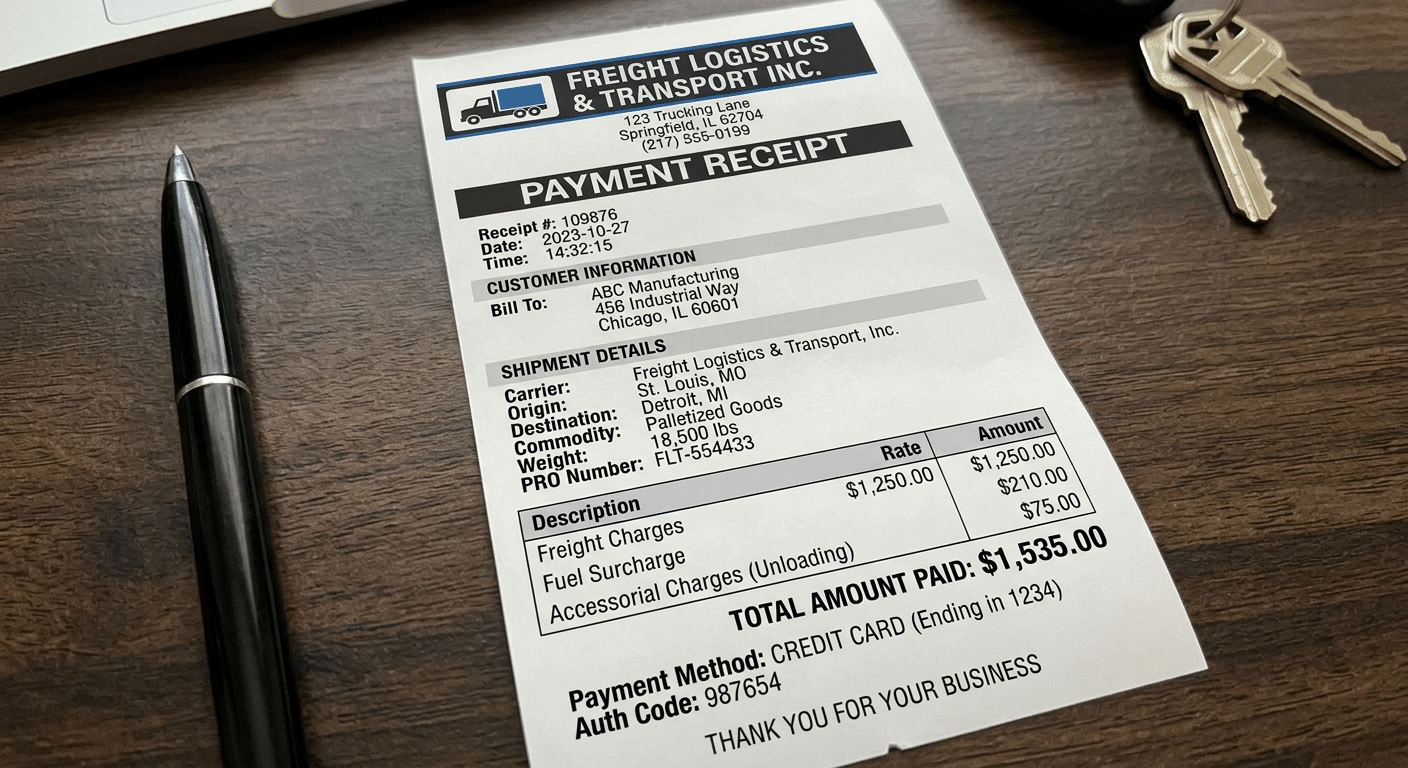



A chargeback notice does more than tell a merchant that money has been removed from its account. The reason code helps to explain the nature of the chargeholder or issuing bank’s claim, the card network rules associated with the transaction, and what types of evidence are required to contest the chargeback.
An understanding of chargeback reason codes is more important than ever for merchants today. Mastercard projects that global chargebacks will have increased by 37% between 2025 and 2029, reaching $359 million in annual transactions. Furthermore, these chargebacks cost merchants on average $82 per chargeback transaction – not including the revenue that is lost as a result of the chargeback.
What Do Chargeback Reason Codes Mean?
A reason code does not indicate that the merchant committed an action that was wrong.
The code indicates the reason for the chargeback from the credit card’s issuer. It can help to determine the chargeback’s:
- allegations of the cardholder
- validity of the chargeback
- required documents to respond to the chargeback
- time limit for responding to the chargeback
- whether the merchant can undertake a representment of the chargeback
- which business process within the merchant is causing the chargeback
Visa categorizes chargebacks under four main categories: fraud, authorization, processing errors and consumer disputes. Mastercard groups chargebacks under message reason codes categorized as authorization-related chargebacks, no cardholder authorization, point-of-interaction errors and cardholder disputes.
Processing companies may alter the reason codes to respond to the chargebacks as they see fit. Merchants should always read the chargeback reason code and the time limit to respond to the chargeback as stated by the processor of the merchant’s acquiring bank.
Visa and Mastercard Chargeback Reason Code List
This practical chargeback reason code list focuses on common merchant-facing disputes. It does not include every ATM, regional or specialized network condition.
Common Visa Chargeback Reason Codes
Visa’s current public rules and merchant guidance use numbered dispute conditions within categories 10 through 13.
| Visa Code | Dispute Condition | Typical Customer or Issuer Claim |
|---|---|---|
| 10.4 | Other Fraud—Card-Absent Environment | The cardholder did not authorize an online, phone or other card-not-present payment |
| 11.2 | Declined Authorization | The transaction was completed after the issuer declined authorization |
| 11.3 | No Authorization | Required authorization was not obtained |
| 12.1 | Late Presentment | The transaction was submitted for clearing too late |
| 12.5 | Incorrect Amount | The amount processed differs from the amount the customer agreed to pay |
| 12.6 | Duplicate Processing/Paid by Other Means | The transaction was charged twice or the customer used another payment method |
| 13.1 | Merchandise/Services Not Received | The customer did not receive the product or service by the expected date |
| 13.2 | Cancelled Recurring Transaction | The customer was billed after cancelling recurring payments |
| 13.3 | Not as Described or Defective Merchandise/Services | The purchase materially differed from its description or was defective |
| 13.6 | Credit Not Processed | The merchant promised or issued a refund that did not reach the cardholder |
| 13.7 | Cancelled Merchandise/Services | The customer cancelled but did not receive the required credit |
Visa Condition 12.6 applies when the same payment credential, date and amount were processed more than once or when qualifying evidence shows the customer paid through another method.
Common Mastercard Chargeback Reason Codes
The current Mastercard Chargeback Guide—Merchant Edition, dated May 19, 2026, recommends several consolidated Mastercard chargeback reason codes for Dual Message System transactions.
| Mastercard Code | Category | Claims It May Cover |
| 4808 | Authorization-Related Chargeback | No valid approval, declined authorization or processing above an approved amount |
| 4834 | Point-of-Interaction Error | Duplicate processing, incorrect amounts, payment by another method and related transaction errors |
| 4837 | No Cardholder Authorization | The cardholder claims the transaction was fraudulent or unauthorized |
| 4853 | Cardholder Dispute | Non-receipt, cancellation, recurring billing, defective goods, credits and other customer claims |
Mastercard continues to reference some older codes, including 4831 for transaction amount differences, 4841 for canceled recurring or digital-goods transactions, 4855 for goods or services not provided and 4860 for credits not processed. Its 2026 guide recommends broader current codes for many transactions and states that several older codes will eventually be eliminated.
Chargeback Reason Code Examples & Supporting Evidence
Evidence should answer the coded claim rather than provide a general history of the customer relationship. The exact requirements depend on the network, transaction type, region and processor instructions.
| Dispute Example | Likely Codes | Evidence That May Help |
| Unauthorized ecommerce order | Visa 10.4; Mastercard 4837 | Authentication results, device and IP data, account history, proof of delivery or use and qualifying prior undisputed transactions |
| Duplicate transaction | Visa 12.6; Mastercard 4834 | Transaction IDs, settlement records, void or refund confirmation or proof that two separate purchases occurred |
| Incorrect amount | Visa 12.5; Mastercard 4834 | Signed receipt, invoice, approved adjustment and records showing the amount the customer authorized |
| Goods not received | Visa 13.1; Mastercard 4853 | Carrier tracking, delivery confirmation, pickup records, service logs and customer communications |
| Cancelled recurring payment | Visa 13.2; Mastercard 4853 | Accepted subscription terms, cancellation date, billing timeline and proof that the disputed charge preceded cancellation |
| Product not as described | Visa 13.3; Mastercard 4853 | Product page from the sale date, photographs, order details, customer messages and evidence of a return or replacement offer |
| Credit not processed | Visa 13.6; Mastercard 4853 | Refund amount, date, transaction reference, processor confirmation and communications explaining the refund timeline |
Mastercard’s 2026 guidance requires cardholder complaints to contain enough detail for the parties to understand the dispute. For point-of-interaction cases involving another payment method, supporting information can include a bank statement, bank transfer, cancelled check or cash receipt.
Example: Unauthorized Online Purchase
If a customer states they did not place an ecommerce order, the merchant’s response should not be limited to an invoice or refund policy.
Evidence of the customer making the purchase may include:
- The results of the EMV 3-D Secure authentication attempts
- Evidence that the device or IP address associated with the merchant and the customer match
- Login records of the customer and their account
- Other transactions that have been processed for the customer in the past that have not been disputed
- Evidence that the customer received and used the purchased product
- The product was delivered to an address associated with the customer
Visa permits several types of evidence to be presented by eligible card-absent fraud disputes to prove that the customer who owns the card received and used the product that was purchased with that card.
Example: Duplicate Processing
A restaurant accidentally closes its selling batch twice. In this case, the transaction that occurred in the later batch may be voided and refunded to the restaurant.
If each of the two charges is for a legitimate separate purchase, then the merchant should provide the receipts, transaction, and order details for each of those purchases. Mastercard does have rules in relation to instances of duplicate payments made by customers who used a different payment method for one of those payments.
Example: Canceled Subscription
The subscriber canceled on June 10 but is disputing the payment made for the subscription renewal on June 8. The merchant may be able to provide evidence that the subscription was created prior to the date of the cancellation and that the terms of the subscription were provided to the merchant at the time of creation.
The response should include the subscriber’s record of the creation of the subscription, the renewal of the subscription, the cancellation of the subscription, and the confirmation of each of those steps and records. If the charge for the subscription occurred after the date of cancellation, however, it may be more appropriate for the merchant to either accept the dispute or to confirm a refund to the subscriber.
Example: Merchandise Not Received
The receipt for the order confirms that the customer purchased the items from the merchant, but does not indicate that they received those products. The merchant must provide evidence of the delivery (or providing access to) of the products to the customer.
Visa’s Condition 13.1 states that if a cardholder indicates that the merchandise or services that were to be delivered (or provided for pickup) by the merchant were not provided by the merchant to the customer by the expected delivery date (or availability for pickup).
How to Use Chargeback Reason Codes to Prevent Future Disputes
Reason code reporting should become an operational dashboard for your business, not a folder of chargeback losses.
Group your chargebacks by reason code and assign each one to the relevant team to fix the underlying problem:
- Fraud codes relate to authentication, device data, card testing, and order fulfillment.
- Authorization codes relate to terminal and gateway settings and transactions.
- Processing-error codes relate to batch processing, transaction entry and voids.
- Consumer-dispute codes relate to descriptors, delivery promises and failures, cancellation, customer support, and product descriptions.
Also track reason codes by product, sales channel, location, campaign, and subscription plan. A sudden increase in Visa 13.1 reason codes may mean a delivery problem. Repeated instances of Visa 13.2 or Mastercard 4853 reason codes may mean a broken cancellation workflow.
Reason codes also relate to the Visa Acquirer Monitoring Program (VAMP). VAMP combines the number of fraud and non-fraud chargebacks with the number of settled card-not-present transactions. Winning a chargeback case does not eliminate the need to reduce the number of transactions that create fraud and chargeback reports.
Payment Nerds can help merchants review chargeback notices. No provider can guarantee the result of a representment claim.
Chargeback Reason Code Questions
Q: What are chargeback reason codes?
A: Chargeback reason codes inform the issuing bank of the reason for the chargeback. These codes determine the network rules and the rights of the parties involved in the chargeback.
Q: Are the reason codes for Visa and Mastercard the same?
A: The reason codes for Visa and Mastercard are different. Visa uses codes such as 10.4 and 13.1, while Mastercard uses codes such as 4837 and 4853. Therefore, the same reasons for chargebacks will have different reason codes on the two cards.
Q: What does the Mastercard reason code 4853 mean?
A: Mastercard reason code 4853 stands for a general cardholder dispute. The reason for the chargeback can be anything from not receiving the goods to billing issues to product defects.
Q: What does Visa reason code 10.4 mean?
A: Visa 10.4 is Other Fraud – Card-Absent Environment. It usually means the cardholder denies authorizing an ecommerce, MOTO, or other card-not-present transaction.
Q: Where can merchants see the complete chargeback reason code list?
A: Visa and Mastercard issue publications on dispute rules and merchant guidance. Merchants should also check their processor’s dispute portal because this includes the specific claim, deadlines and submission instructions related to the case.
Q: Can a chargeback reason code change?
A: In some cases, an issuer might seek a different, valid reason code at later points in the process. Mastercard’s rules, for instance, outline processes for converting a dispute to No Cardholder Authorization after a merchant’s second representment.
Q: What’s the most common chargeback response mistake?
A: Submitting generic invoices, policies or customer histories that don’t respond to the coded claim. Evidence needs to address whether the transaction was authorized, delivered, canceled, the amount charged, duplicate charges, etc.
Q: How long does a merchant have to respond?
A: Response times differ between networks, codes, transactions and processors. Merchants should use the date on the dispute because the processor’s deadline for submission might be shorter than what’s allowed by the network.
Q: Should merchants fight every chargeback?
A: No. Accept chargebacks that are legitimate as well as those for which you don’t have sufficient evidence. Representment should be reserved for chargebacks that are disputing the wrong reason code and where the merchant has documentation that directly refutes the claim.
Use Chargeback Reason Codes to Improve Your Business Operations
Chargeback codes make disputes more predictable. They tell the merchant what the card issuer believes happened, what evidence may be helpful, and where the problem in the merchant’s operations may exist.
The best chargeback strategy goes beyond representment. It involves tracking codes to identify where the merchant’s operations can be improved so that, in the case of a chargeback for a disputed transaction, the merchant has the records to prove the chargeback was invalid.
Sources
- Visa. “Dispute Management Guidelines for Visa Merchants.” Accessed August 2026.
- Visa. “Visa Core Rules and Visa Product and Service Rules.” Accessed August 2026.
- Mastercard. “Chargeback Guide—Merchant Edition.” Accessed August 2026.
- Mastercard. “What Is the True Cost of a Chargeback for Businesses?” Accessed August 2026.
- Visa. “Next Generation Post-Purchase Solutions.” Accessed August 2026.
- Visa. “Visa Resolve Online.” Accessed August 2026.