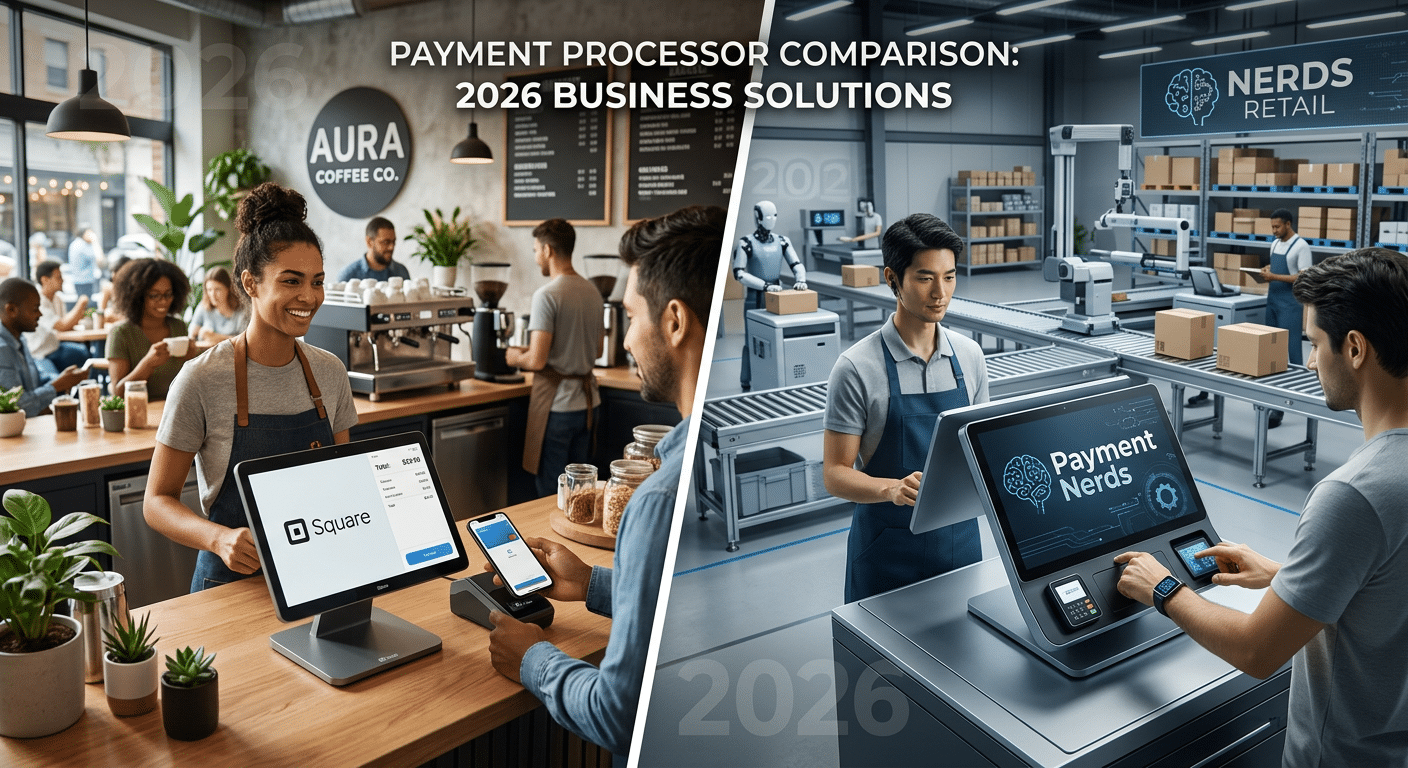



Customers do not think in channels. They may browse online but buy in-store. They may order over the phone, but return in person. They may pay an invoice later or use a saved card across various channels. Yet many businesses lack a connected payment system to process payments across these channels.
A connected payments solution can integrate payments from online, in-store, mobile, invoice, and customer portal systems into one payment solution and workflow. This offers multiple benefits for the business, including streamlined reporting, easier account reconciliation, better customer records, and a payment system that provides greater control.
Why Businesses Need Connected Payment Processing Solutions
Disconnected payment systems can be a significant operational drag on a business. Most businesses currently use different payment processors for e-commerce, POS, mobile payments, and invoices. This makes it difficult for them to properly monitor and manage their accounts.
Connected payments also play a significant role in the checkout experience for customers. According to Baymard, the cart abandonment rate for e-commerce websites is as high as 70.19%. While not all cart abandonments are due to payment processing software, it demonstrates the importance of a connected payment system that is efficient end-to-end for the customer.
Finally, if a business accepts Visa cards online or over the phone, it must be aware of VAMP. VAMP is Visa’s program for fraud and chargeback management, replacing the separate programs for each. The VAMP ratio calculates the total of fraud and non-fraud chargebacks divided by the total of settled Visa transactions for a business. Businesses must have a payment system that allows them to monitor fraud and chargebacks to maintain their account stability.
Who Needs Connected Payments
This guide is for businesses, including but not limited to:
- retail (online and in store)
- restaurants and hospitality
- service-based industries
- B2B sales
- healthcare, legal and other professionals industries
- ecommerce with in store locations
- multi-location businesses
- subscription and membership businesses
- any business looking to connect their payment processor with accounting and ERP software
- finance departments looking to reduce manual bookkeeping processes
The more payment channels a business uses, the more valuable a connected payments system becomes. While a business may start with one payment terminal or an online payment application, its growth will likely require a more connected payments solution.
Connected Payment Processing Options Compared
Connected payments can be built in several ways. Some businesses use an all-in-one platform. Others connect a gateway, merchant account, POS, ecommerce store, and accounting system separately.
| Option | Best For | Main Strength | Main Tradeoff |
|---|---|---|---|
| Unified POS and Ecommerce Payments | Retailers and restaurants selling across channels | Keeps online and in-store sales closer together | Best when the platform fits the whole business |
| Gateway + Merchant Account Integration | Businesses that need more control over processor fit | Flexible for ecommerce, MOTO, ACH and recurring billing | More setup planning than all-in-one tools |
| ERP or Accounting Payment Integration | B2B and service businesses | Improves invoice matching and reconciliation | Requires clean data mapping |
| Mobile and Field-Service Payments | Contractors, delivery teams and service providers | Lets staff accept payments away from a fixed location | Needs permissions, devices and staff training |
| Customer Portal Payments | Repeat customers, B2B accounts and healthcare or legal billing | Gives customers self-service payment access | Needs secure login and account matching |
| Embedded Payments | SaaS platforms and marketplaces | Lets users accept payments inside the software | Adds onboarding, support and risk-management complexity |
The right connected payment setup depends on where payments begin, where records need to land, and how much control the business needs over processor relationships.
Connected Payment Processor and Platform Providers Compared
The best provider depends on whether the business needs merchant account flexibility, POS/ecommerce unity, gateway control, high-risk support, embedded payments, or better reconciliation.
| Provider | Best Fit | Key Strength | Main Tradeoff |
|---|---|---|---|
| Payment Nerds | Businesses that need connected payments across online, in-store, mobile, ACH, MOTO, invoicing, or high-risk channels | Strong fit for merchant account guidance, gateway strategy, integrated reporting, chargeback prevention, Verifi, Ethoca, 3DS and VAMP-aware monitoring | More consultative than a simple plug-and-play processor |
| Stripe | Online-first businesses, SaaS platforms and companies building custom online and in-person payment flows | Strong APIs, Terminal, Billing, Invoicing, Payment Links and unified commerce tools | Not a fit for every high-risk or restricted business model |
| Shopify POS and Shopify Payments | Retailers already using Shopify for ecommerce and physical retail | Strong online and in-store data connection within the Shopify ecosystem | Less flexible for restricted categories or businesses needing custom acquiring |
| Square | Small businesses that want POS, invoices, online checkout and mobile payments in one ecosystem | Easy setup and strong simplicity for local and service businesses | Less flexible for complex underwriting or custom gateway needs |
| NMI | Merchants, ISVs and partners that need gateway flexibility across ecommerce, mobile, in-person and embedded payments | Broad processor connectivity and omnichannel gateway tools | Requires the right acquiring relationship |
| Authorize.net | Businesses that want a familiar gateway connected to ecommerce, invoices, recurring billing, or virtual terminal workflows | Established gateway ecosystem with broad compatibility | Gateway tools do not replace merchant account fit |
These are fit-based comparisons, not universal rankings. A retail store connecting POS and ecommerce needs a different setup than a B2B company connecting invoices to ERP or a high-risk merchant trying to unify gateway reporting.
Understanding VAMP for Connected Payments
For connected payments, disconnected systems pose a risk to your merchant account and business. VAMP stands for Visa’s Anti-Fraud and Monitoring Program. The VAMP ratio measures the number of fraud and non-fraud disputes relative to the total number of transactions settled on the Visa account. Visa looks at instances of fraud and chargebacks for a given account.
Connected payments allow a merchant to monitor the specific causes of fraud and chargeback reports. By knowing that online transactions result in TC40 fraud reports while in-store and subscription transactions are free of charges and fraud reports, the merchant has insight into which payment channels pose the most challenges.
Enumeration attacks are also included in the VAMP program. Enumeration attacks occur when bots repeatedly attempt to use stolen card details at checkout. The enumeration attack ratio is the number of instances of suspected card-testing divided by the total number of transaction attempts on a given account. Visa utilizes the VAAI score to measure this ratio. For businesses that have online forms and checkout pages, implementing bot controls can significantly reduce the frequency of enumeration attacks on payment forms. Implementing CAPTCHA software on high-risk forms and monitoring failed payment attempts can also help prevent enumeration attacks.
How to Connect Payment Processing to Your Business Systems in 2026
Map where the payments occur in your business. This includes ecommerce, POS, invoices, phone payments, field payments, customer portals, subscriptions, ACH payments, and mobile wallets. Also, map where the payment records should go after payment authorization and settlement.
To connect the processor to your business systems, follow these steps:
- choose the merchant account and payment gateway
- confirm your POS, ecommerce and software systems are compatible
- determine which payment types will be accepted (cards, ACH, wallets, payment links)
- configure fraud controls (AVS, CVV, 3DS)
- configure fraud detection software (Verifi, Ethoca) and alerts for chargebacks
- connect the payments to your orders and accounts
- test refund and chargeback functions (refunds, voids, failed payments, partial payments)
- verify payment and transaction reporting
- verify integration with accounting software and ERP system
- monitor fraud activity after implementation
The most important step is to fully test the payment processing system. From the moment a customer completes their payment to the moment they receive their products or services, the payment system must work seamlessly. The payment system must also process returns, chargebacks, and accounting functions after the sale.
Connected Payment Processing Costs Explained
The costs of connected payment processing depend on the provider and various factors related to the business and the payment methods used.
Costs can include transaction fees, gateway fees, monthly fees, software fees, hardware costs, integration costs, ACH fees, chargeback fees, and PCI-related or fraud-tool costs. If the business is high-risk, there may be additional fees beyond the standard costs.
Instead of asking whether the connected payment processing costs more than a disconnected system, it is more valuable to ask how it will reduce the business’s overall back-office costs.
Common Connected Payment Processing Mistakes to Avoid
The biggest mistake people make with connected payments is assuming it means accepting payments in more places. A business could have multiple sales channels, but if its reporting and monitoring systems are not connected, it still does not benefit from a connected payment system. The goal is not to have more payment-processing software, but to have a clearer payment-processing system for the business.
The second-biggest mistake is choosing payment processing software before ensuring that the merchant account will accept the business. A great payment processing software may not work with its merchant account processor.
Finally, if a business accepts cards that are not present at the time of purchase (such as those placed online), they should not ignore the Variable Analysis and Monitoring Process (VAMP) reports from their merchant account provider. Visa has above-standard and excessive payment categories that can result in fees for businesses. A connected payment-processing account should make it easier for businesses to see these reports, not harder.
Key Features of Connected Payment Solutions
Unified Channel Reporting
Connected payments should provide a business with a clearer view of payment activity from online, in-store, mobile and invoice channels. While not every transaction has to be within one software platform, the reporting functionality should be uniform enough for the business to effectively monitor the payments received through each channel. Reporting can help monitor sales from each channel, sales by payment methods, sales by location, employees, customer type and the number of refunds and when they are deposited. Without an effective payment report, teams will spend too much time generating reports from each separate software platform.
Customer and Order Matching
Connected payments should be able to associate each payment with the customer that made the purchase, the order they made, the invoice, booking, appointment, subscription or account. This is critical for customers that purchase from a company online but in-store, make a deposit for an in-store purchase, use saved cards to purchase products or services from the company, or contact the company with questions about their charges. By having an effective customer and order system in place, any customer that disputes a transaction can have their order, receipt, delivery and any associated communications found in one system.
POS, Ecommerce and Mobile Compatibility
Connected payments should work in the same channels as the company takes sales. Depending on the nature of the company, that might be POS or ecommerce only. However, other channels could include purchase links, QR codes, mobile payment terminals, Tap to Pay systems, virtual terminals, ACH and customer portals. Each compatibility channel should allow for refunds, voids, receipts and tips, taxes and discounts and stored payment credentials. Even if the payment processor is connected to the software, it must work within the processes of the company.
Fraud, Dispute and VAMP Monitoring
Connected payments should allow for a business to monitor the risk of fraud and disputes with customers. Under VAMP, fraud and chargeback disputes are monitored under the same framework by Visa. TC40 reports track the number of fraud reports for a company’s transactions while TC15 reports track the number of chargebacks for that company. Therefore, both reports will show the risk of a company for its payment processor. Connected payments should allow for a business to monitor the number of fraud attempts, customer chargebacks and disputes by channel. If most chargebacks occur from one channel, the business should be able to recognize this to take the necessary actions to reduce such issues.
PCI Compliance and Secure Data Handling
Because connected payments will pass through more data, the system should be PCI compliant. The PCI Security Standards Council states that all entities involved in processing payments are required to comply with the PCI DSS, including merchants of any size and sales volume. By reducing the number of systems that a company requires to handle payment data, the company will also reduce the risk of payment data getting out of control. Methods like hosted payments, tokenization, secure devices, secure APIs and user permissions will play a role in securing any data.
Reconciliation and Deposit Visibility
One of the main benefits of using connected payments is the reconciliation that can occur between payments and deposits. A company will be able to match their payments to their deposits, refunds, chargebacks, batches and accounting software. This is especially helpful for companies with multiple locations, ecommerce sales with returns, B2B companies or companies that take deposits and balances. Connected payments will reduce the amount of time spent on reconciliation and help with accounting software and reports, instead of creating another software and dashboard to manage their payments.
FAQs About Connected Payments
Q: What are connected payments?
A: Connected payments refer to the process of linking various types of transactions to a more unified system that can report on and manage payment and customer records.
Q: What does it mean to connect a payment processor?
A: Connecting a payment processor allows a business’s payments to be linked to its various management systems, whether they manage orders, invoices, customers, accounting software, point-of-sale (POS) systems, or ecommerce systems.
Q: How are connected payments different from integrated payments?
A: The terms are often used interchangeably. Connected payments refers to unifying payments across various channels; integrated payments refers to connecting payment systems with management software.
Q: Why do businesses need connected payments?
A: Businesses implement connected payments to automate their processes, improve the customer experience, connect their payments with their orders and invoices, and streamline reporting.
Q: What is VAMP, and why does it matter for connected payments?
A: VAMP stands for Visa’s fraud and dispute monitoring system. The VAMP ratio helps determine the number of fraudulent and non-fraudulent disputes, divided by the total number of transactions settled with Visa. Businesses need to be aware of this figure to understand their fraud and dispute issues across their different sales channels.
Q: What is an enumeration attack?
A: An enumeration attack involves bots attempting to use various stolen or guessed payment card details on a checkout page for a business. Businesses with checkout forms must implement bot detection software to prevent these attempts.
Q: What should businesses look for in a connected payment processor?
A: A business should look for various features in their payment processor, including compatibility with sales channels, a good merchant account, gateway compatibility, reporting and reconciliation software, ACH payments, fraud detection software, PCI compliance, and tools to manage chargebacks and VAMP software.
Conclusion
Connected payments allow you to unify transactions across different channels, giving your business easier access to payment data after each sale. When you implement a connected payments solution, you want to ensure it improves the customer experience and reduces the work required to reconcile payments. Additionally, you need payments that offer fraud and dispute monitoring and that provide better control over your payments.
If you need connected payments or would like to connect a payment processor to your business, Payment Nerds can help you find the best solution. It is not enough to simply have payment options in various locations for your customers. Your payment solution should work well with the rest of your business operations.
Sources
- Payment Nerds. “Connected Payments | Unified & Seamless Processing.” Accessed May 2026.
- Payment Nerds. “Integrated Payment Processing: Connect Your Business Software and Systems.” Accessed May 2026.
- Stripe. “Unified Commerce 101: A Guide.” Accessed May 2026.
- Stripe. “Stripe Terminal | Unified Commerce Platform.” Accessed May 2026.
- Shopify. “Unified Commerce Payments vs. Integrated Systems.” Accessed May 2026.
- Shopify. “Unified Commerce and Ecommerce.” Accessed May 2026.
- NMI. “Full Commerce Enablement.” Accessed May 2026.
- Baymard Institute. “Cart & Checkout Usability Research.” Accessed May 2026.
- Visa. “Visa Acquirer Monitoring Program Fact Sheet.” Accessed May 2026.
- PCI Security Standards Council. “Merchant Resources.” Accessed May 2026.