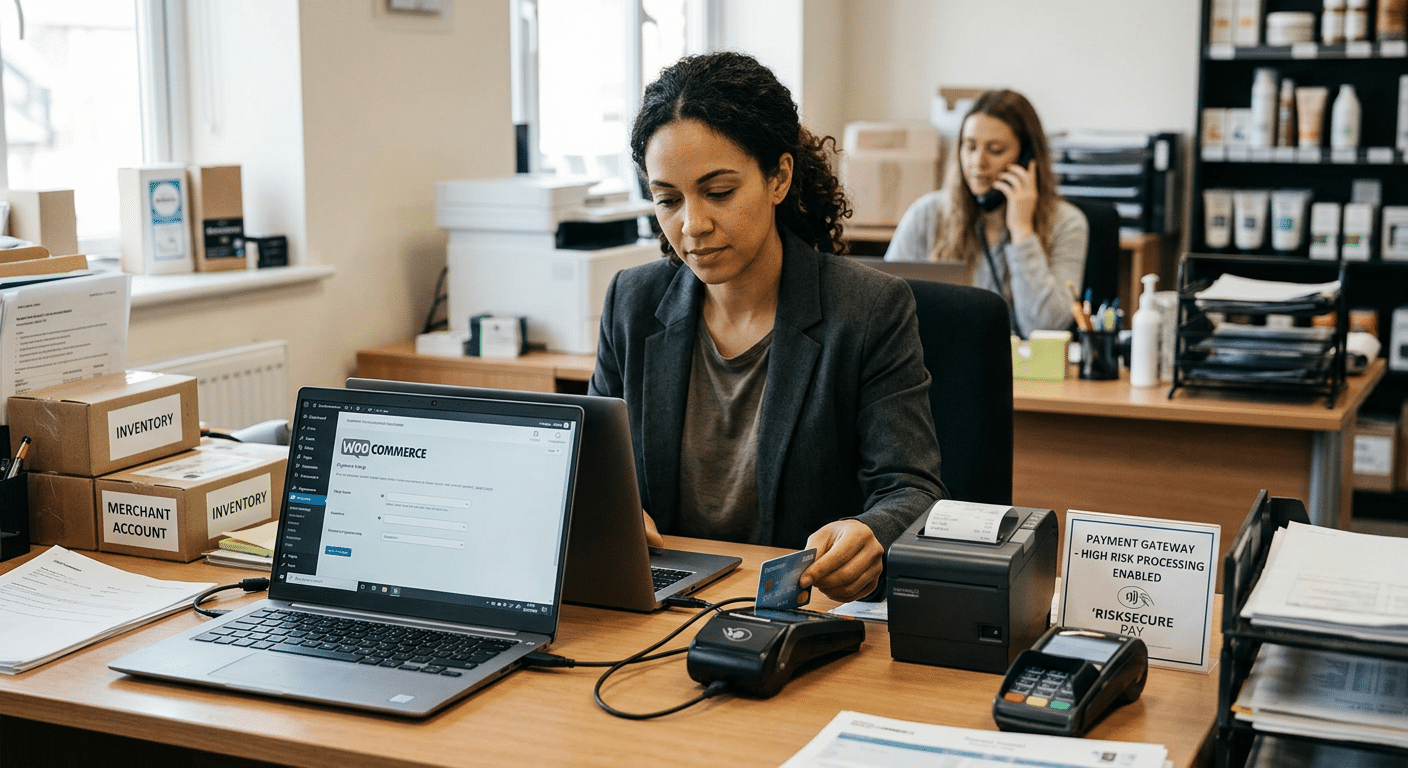



While the two terms are often used together, they serve different purposes. A payment gateway is responsible for moving the payment information from the checkout, terminal, invoice, or form to the payment processor. On the other hand, the merchant account is the account that allows the business to accept payments.
It is possible to have a payment gateway in place while having the wrong merchant account. Payments will be processed, but it may not be the best option for the business. Therefore, understanding both the payment gateway and merchant account is crucial to setting up a payment system that works effectively for a business.
Why Businesses Need the Right Payment Processing Structure
A business payment processing setup involves much more than the customer clicking the “pay” button. Elements of a business’s payment processing can include approval rates, funding, fraud controls, chargebacks, reporting requirements, PCI compliance, recurring billing, and the process for issuing refunds and reconciling accounts. While the payment gateway will impact the customer checkout experience, it’s the merchant account services that will impact the business underwriting, monitoring, and funding of that account.
The checkout experience is another element to consider when establishing a business payment processing. According to Baymard Institute, the average documented rate at which customers abandon their shopping carts online is 70.19%. While this does not indicate that the abandonment of shopping carts is directly related to the payment processing software, it does indicate why the customer experience in payment processing is a major concern for the business.
Another reason to consider the impact of payment processing on a business is VAMP. VAMP is the name of the program that Visa has established to monitor fraud and disputes in its transactions, having previously used separate programs to monitor each category. The VAMP ratio compares the combined number of fraud and dispute instances (both fraud and non-fraud) to the total number of settled Visa transactions during a given timeframe for a business. In other words, businesses need payment processing software and setup that allow them to effectively monitor instances of fraud and disputes in their accounts.
Who Should Understand Payment Gateway vs Merchant Account
This guide is most useful for:
- Any ecommerce business
- Any service business that takes online payments
- Any B2B company that sends invoices
- Any subscription or membership business
- Any retailer that wants to accept online payments
- Any software company that wants to include payment functionality
- Any high-risk business that is comparing merchant account companies
- Any business that has previously been frozen or declined by its merchant account company
- Any finance department that is trying to improve financial reconciliation
- Any business that is comparing merchant account companies to determine the best option for operations and processes
The more your business depends on online checkout, recurring billing, card-on-file payments, payment links, invoices, ACH, high-ticket payments, or regulated products, the more important this distinction becomes. A simple all-in-one provider may be enough for some businesses, but others need a more deliberate gateway and merchant account structure.
Payment Gateway and Merchant Account Options Compared
A gateway and merchant account can be bundled together or selected separately. The right setup depends on business model, payment volume, risk profile, technical needs and how much control the merchant needs over processing.
| Setup | Best For | Main Strength | Main Tradeoff |
|---|---|---|---|
| All-In-One Processor | Low-risk small businesses that want fast setup | Gateway, processing and account tools are bundled | Less flexibility if risk or complexity increases |
| Separate Gateway + Merchant Account | Growing businesses that want more control | Better fit for processor choice, integrations and reporting | More setup planning upfront |
| High-Risk Merchant Account + Gateway | Regulated, subscription, or chargeback-sensitive businesses | Better underwriting fit and account stability | Custom pricing, more documentation and possible reserves |
| Platform-Native Payments | Shopify, WooCommerce, SaaS, or marketplace businesses | Convenient integration with existing software | May restrict certain categories or workflows |
| Integrated Merchant Services Setup | Businesses connecting payments to ERP, CRM, POS, or accounting systems | Cleaner data flow and reconciliation | Requires integration planning |
| Multi-Gateway or Backup Processing | Higher-volume or higher-risk merchants | More resilience if one account is reviewed | Requires careful routing and compliance oversight |
For most businesses, the right answer is not “gateway or merchant account.” It is how the gateway, merchant account, processor, acquirer and business software work together.
Best Merchant Account and Gateway Providers Compared
The best provider depends on whether the business needs fast setup, high-risk underwriting, gateway flexibility, ecommerce tools, recurring billing, ACH, or integrated reporting.
| Provider | Best Fit | Key Strength | Main Tradeoff |
|---|---|---|---|
| Payment Nerds | Businesses that need merchant account services, gateway guidance and long-term account stability | Strong fit for high-risk underwriting, gateway compatibility, ACH, card processing, Verifi, Ethoca, 3DS, chargeback prevention and VAMP-aware monitoring | More consultative than a simple plug-and-play processor |
| Stripe | Online-first, SaaS and platform businesses that fit Stripe’s policies | Strong developer tools, hosted checkout, Billing, APIs and global payment methods | Not a fit for every restricted or high-risk business model |
| Square | Small in-person and omnichannel businesses that want simple bundled payments | Easy setup, POS tools, invoices and retail-friendly features | Less flexible for complex underwriting or high-risk categories |
| NMI | Merchants, ISVs and partners that want gateway flexibility | Strong gateway layer for integrated, omnichannel and processor-connected payments | Requires the right acquiring relationship |
| Authorize.net | Businesses that want a familiar gateway with broad compatibility | Established gateway ecosystem, recurring billing, eCheck and customer profiles | Gateway tools do not replace merchant account fit |
| PaymentCloud or SoarPay | High-risk merchants needing placement support | High-risk account support for harder-to-place industries | Pricing and terms depend heavily on underwriting |
These are fit-based comparisons, not universal rankings. The best setup depends on the business model, sales channel, risk profile, integration needs and how much control the merchant needs over the payment stack.
Understanding VAMP for Gateway and Merchant Account Decisions
VAMP should be part of the conversation regarding the initial setup of any business that accepts Visa cards online or over the phone. VAMP stands for Visa’s approach to fraud and dispute monitoring. The VAMP ratio gauges the fraction of fraud and non-fraud disputes over total Visa transactions.
The gateway will play a role in monitoring and controlling risk for the merchant. The merchant account will determine how the merchant will be monitored. Both of these factors will play a role in the number of fraud and disputes the merchant creates.
VAMP also provides a means of monitoring enumeration risk. Enumeration risk involves bots testing the customer’s Visa card at the checkout page of the merchant. The enumeration ratio determines the number of suspected card-testing transactions to total transaction attempts. Visa utilizes VAAI scores to determine enumeration risk for merchants. Businesses can control enumeration risk through velocity rules, bot controls, gateway filters, and failed-attempt monitoring.
How to Choose the Right Payment Processing Setup in 2026
Decide whether you need a bundled payment setup or a separate gateway and merchant account. An all-in-one provider works best for low-risk, small businesses. Growing ecommerce, B2B, subscription, high-risk, and software-integrated businesses should consider separate payment setups.
Consider each of the following features when making your decision:
- Business category support
- Payment gateway compatibility
- ACH and eCheck support
- Subscription billing support
- Fraud control tools
- Verifi, Ethoca, and 3DS support
- Vendor-specific tools like VAMP monitoring and chargeback reporting
- Funding and reserve policy
- Integration with third-party software like accounting, CRM, and POS systems
- Customer support quality and response times
A good payment solution for 2026 should work for your business today and support your growth into the future.
Common Payment Gateway and Merchant Account Mistakes to Avoid
Gateway and merchant account costs will vary by provider. Factors that impact costs include the type of transactions that must be processed, from which sales channels transactions occur, the risk of those transactions, the volume of transactions to be processed, the value of the tickets for those transactions, the payment gateway that is used, whether ACH payments are to be processed, and other similar factors.
The cost of a bundled processor may be appealing due to the simplicity of the account’s costs. However, using a separate payment gateway and merchant account may be more complex in terms of costs but provides more control over those costs and risk factors.
Rather than looking at the cost of a merchant or payment gateway account based on the transaction rate offered, it is more important to consider the total cost of operating the account. A low transaction rate is meaningless if the merchant is experiencing difficulties with account activity, chargebacks, or deposits, or if the gateway does not support the billing model the business uses. For businesses selling high-risk products or services, the cost of the account may be more important to consider than the transaction rates.
Payment Gateway and Merchant Account Mistakes to Avoid
The biggest mistake people make is treating a payment gateway and a merchant account as the same thing. One moves the transaction data, and the other determines how the transaction gets approved or denied.
Another avoidable mistake is choosing a payment gateway for your website before you confirm that your merchant account will support your business. The gateway may work perfectly on the website, but not for your merchant account.
Ignoring the VAMP system is yet another mistake that online and card-not-present merchants should avoid. Above Standard and Excessive are two Visa categories that, if used excessively or with high fraud and enumeration rates, will result in fees for merchants. Avoid these by monitoring your merchant account before the payment gateway does.
Key Features to Look for in the Right Payment Setup
Gateway Compatibility
Any payment gateway has to be compatible with the systems your business already uses. These could include an ecommerce website, POS system, ERP software, CRM software, booking software, patient portal, field service software, invoicing software, or subscription software. It’s not enough to have a simple plugin for your software to support payments. You need functionality for refunds, voids, recurring payments, saved cards, payment links, virtual terminals, and more detailed reporting and fraud controls.
Merchant Account Fit
The merchant account provider has to understand your business. This includes your products or services, how customers pay for them, how you deliver your products or services to customers, and how you handle returns and chargebacks. For high-risk merchants, this is even more important. Businesses in categories like CBD, vape products, nutraceuticals, subscriptions, travel, adult products, gaming, debt relief, digital goods, firearms, and others fall into higher risk categories that require a merchant account with an understanding of those specific risks.
Fraud and Chargeback Controls
Any good payment system should include tools to help your merchant manage fraud and chargebacks before they become a costly problem for your business. These tools include AVS, CVV, velocity rules, fraud scoring, risk-based 3DS, chargeback alerts, refund systems, and reporting. Under VAMP, fraud and chargeback controls are even more important. TC40 is Visa’s fraud report record for merchants, and TC15 is Visa’s dispute or chargeback record for merchants. Both of these records can have a major impact on how the acquiring bank sees the risk of your business.
ACH, eCheck and Alternative Payment Methods
While credit and debit cards are important payment methods for your business, you might also need to support ACH transactions, eCheck, digital wallets, payment links, invoices, and more. This is true for B2B software companies or any business that takes high-value orders or offers subscription models. Not all payments should necessarily be made with credit and debit cards. ACH payments are best for high-value orders, for example. Your software and merchant account should support these alternative payment methods.
Reporting and Reconciliation
The payment gateway and merchant account should provide reports that connect to your orders, invoices, customers, subscriptions, deposits, refunds, and chargebacks. If the reports from your merchant account software do not line up with your accounting and business software, you will have to manually reconcile your transactions. If your merchant account software does not allow you to quickly see if chargebacks are increasing for a specific product, category, location, subscription plan, or sales channel, you will have to manually track this information.
PCI Compliance and Payment Security
Even with a managed payment system in place, your business is still responsible for some PCI aspects. The PCI Security Standards are for any entity involved in processing payments, regardless of size. You want to limit the amount of data that is passed to your business; your payment system should be able to support methods like hosted checkout, tokenization, secure APIs, encrypted card readers, and user permissions to minimize data exposure.
FAQs About Payment Gateways and Merchant Accounts
Q: What is the difference between a payment gateway and a merchant account?
A: A payment gateway securely transmits payment data from the checkout, invoice, terminal, or form that accepts the customer’s payment. The merchant account is the account that receives the payments from the customers.
Q: Do I need both a payment gateway and a merchant account?
A: Most businesses require both these services. Depending on the service providers selected, both functions can be bundled into an all-in-one merchant account processor or purchased separately for more customized merchant account services.
Q: What are merchant account services?
A: Merchant account services allow businesses to receive their payments. Merchant account services may include underwriting, card processing, ACH payments, payment gateways, fraud monitoring, chargebacks, and account and settlement management.
Q: Is Stripe a payment gateway or a merchant account?
A: Stripe bundles several functions together. Stripe includes payment processing, platform services, and more. It is essentially an all-in-one merchant account solution.
Q: What is VAMP, and why does it matter?
A: VAMP is a program run by Visa that monitors fraud and disputes on merchant accounts. The VAMP ratio measures the number of fraud and non-fraud disputes that a merchant account receives, divided by the total number of settled Visa transactions. These two metrics must be managed by merchants.
Q: What is an enumeration attack?
A: An enumeration attack is performed by bots and targets the checkout page of a merchant. Fraudsters will attempt to input stolen or guessed credit and debit card information to purchase items from the merchant without completing the order themselves.
Q: How should high-risk businesses choose merchant account services?
A: High-risk businesses should consider several factors when choosing a merchant account service provider. These factors include the type of business and products offered, underwriting information and criteria, chargebacks and returns policies, fraud monitoring and prevention policies, VAMP monitoring, terms of the merchant account reserve, and the experience of the merchant account service with businesses in the same category as the business being outfitted with the account.
Conclusion
A payment gateway and a merchant account both solve different parts of the same problem. A payment gateway handles the movement of payment data. On the other hand, a merchant account handles approval, funding, underwriting, and account stability for the business. Businesses need both of these solutions to function effectively.
Whether you are comparing merchant account services or trying to decide whether your business needs a merchant account with a payment processor or one with high-risk services alone, the experts at Payment Nerds can help you decide what is right for your business and what payment solution will best suit the operations of your business.
Sources
- Payment Nerds. “Connected Payments.” Accessed May 2026.
- Payment Nerds. “Integrated Payment Processing: Connect Your Business Software and Systems.” Accessed May 2026.
- Payment Nerds. “High-Risk Gateway Fees & Merchant Account Tips.” Accessed May 2026.
- Payment Nerds. “Guide to Choosing the Right Merchant Services Provider.” Accessed May 2026.
- Stripe. “What Is a Merchant Account vs. Payment Gateway?” Accessed May 2026.
- Stripe. “Payment Processor vs. Merchant Account.” Accessed May 2026.
- Baymard Institute. “Cart & Checkout Usability Research.” Accessed May 2026.
- Visa. “Visa Acquirer Monitoring Program Fact Sheet.” Accessed May 2026.
- NMI. “Full Commerce Enablement.” Accessed May 2026.
- Authorize.net. “Payment Processing: Accept Payments Anywhere.” Accessed May 2026.
- PCI Security Standards Council. “Merchant Resources.” Accessed May 2026.